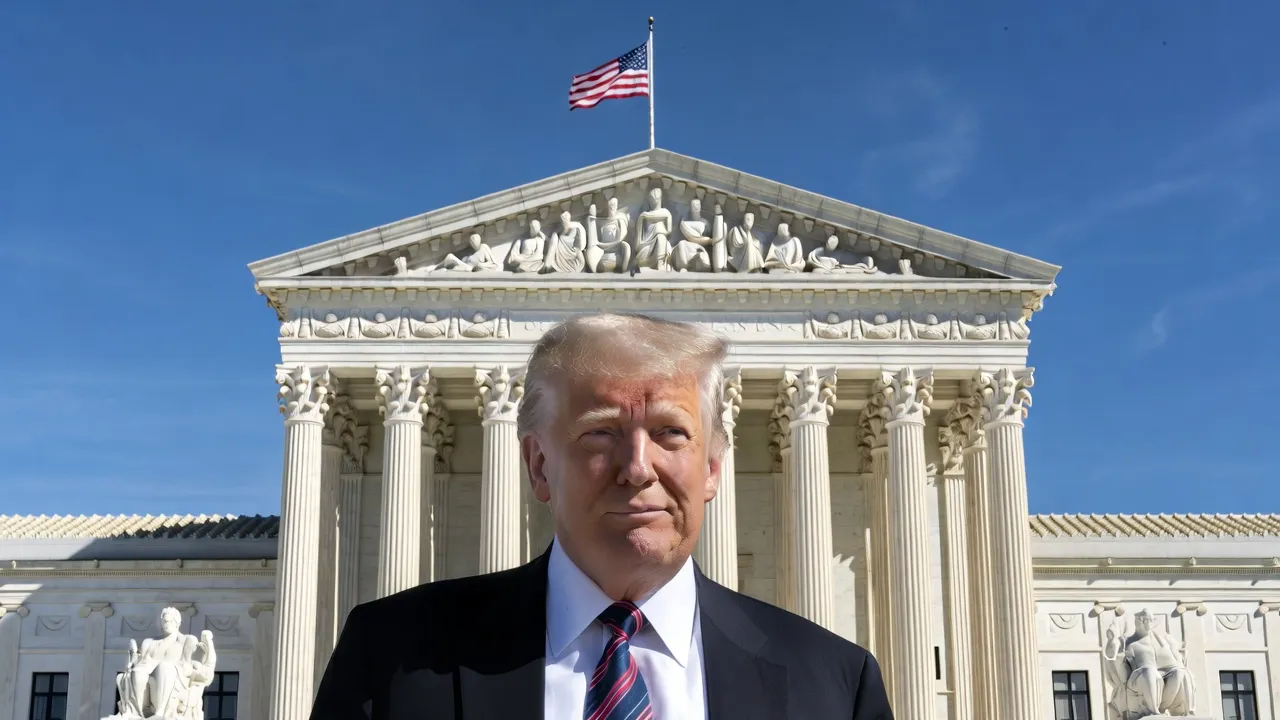
The Supreme Court ruled 6-3 to temporarily allow the Trump administration to use the expanded SAVE database to verify voter citizenship.
Table of Contents
Supreme Court Rules 6-3 to Allow Trump Administration to Use SAVE Database for Voter Citizenship Checks
The U.S. Supreme Court has issued a 6-3 emergency ruling allowing the Trump administration to temporarily resume use of an expanded federal database to help verify the citizenship status of people listed on state voter rolls.
The decision involves the federal government’s Systematic Alien Verification for Entitlements (SAVE) system, a database operated by the Department of Homeland Security (DHS).
The ruling came on September 25, 2026, as the United States approaches the November midterm elections. However, the decision does not mean that the Supreme Court ruled that noncitizens are widely voting in U.S. elections, nor does it automatically remove anyone from a voter-registration list.
What Did the Supreme Court Decide?
The case is Department of Homeland Security v. League of Women Voters, docket number 26A308.
In a 6-3 unsigned order, the Supreme Court granted the Trump administration’s request to put a lower-court order on hold while the broader legal case continues.
The decision allows DHS to continue operating the expanded version of SAVE and allows state and local authorities to use the system for citizenship verification while the litigation proceeds.
The three justices who publicly dissented were Justice Sonia Sotomayor, Justice Elena Kagan and Justice Ketanji Brown Jackson.
Importantly, this was an emergency stay, rather than a final decision resolving every legal question surrounding the expanded SAVE program.
What Is the SAVE Database?
SAVE stands for Systematic Alien Verification for Entitlements.
The program has existed since the 1980s and was originally designed to allow government agencies to verify immigration and citizenship information, particularly when determining eligibility for certain public benefits.
The Trump administration expanded the system in 2025 to allow state and local authorities to use additional federal records when checking voter-registration information.
According to the Supreme Court’s order, the modified system added checks against additional records, including Social Security numbers, and allowed state and local agencies to conduct bulk searches involving multiple individuals.
That expansion became the center of the legal dispute.
Why Did the Trump Administration Want to Use SAVE for Voter Rolls?
The administration argues that federal databases can provide states with another tool for determining whether individuals registered to vote are eligible citizens.
The federal government asked the Supreme Court to intervene after lower courts blocked the expanded SAVE program.
The administration argued that federal law gives DHS authority to obtain citizenship and immigration information from other federal agencies and respond to requests from state and local election officials.
The Supreme Court’s majority agreed, at least at this stage of the litigation, that the lower-court order should be stayed.
The Court wrote that the lower-court order was preventing the federal government from using the program it believed was best suited to assist state and local agencies with citizenship verification.
Does This Mean Noncitizens Will Automatically Be Removed From Voter Rolls?
No.
This is one of the most important distinctions missing from some social-media posts about the ruling.
The Supreme Court decision allows the expanded database to be used for verification purposes. It does not create an automatic process in which every person flagged by SAVE is immediately removed from the voter rolls.
States still have their own election procedures and legal requirements for maintaining voter-registration lists.
The use of SAVE is also voluntary, according to reporting by The Associated Press.
There is another major limitation: federal law generally restricts states from conducting systematic voter-roll removals during the 90 days before a federal election.
With the November 3, 2026 election approaching, that restriction could significantly limit the immediate effect of the Supreme Court’s decision on voter registrations.
Why Was the SAVE Expansion Challenged in Court?
The expanded program was challenged by voting-rights and privacy organizations, including the League of Women Voters.
A federal district judge in Washington, D.C., had previously blocked the expanded SAVE system.
That court found that the administration’s use of the expanded system raised legal and privacy concerns.
The challengers argued that the government’s use of additional federal records and bulk searches could result in eligible citizens being incorrectly flagged.
The dispute therefore involves both election administration and privacy law.
The Supreme Court’s September 25 order temporarily changed the situation by allowing the expanded system to operate while the legal challenge continues.
What About Incorrect Matches?
Another important part of the debate is the accuracy of the underlying records.
Some local officials have reported instances where people flagged through federal databases were later determined to be U.S. citizens.
For example, officials in Travis County, Texas, reported that they investigated voters flagged by SAVE as apparent noncitizens and found that a portion were actually citizens.
These examples are part of the reason opponents of the program have raised concerns about erroneous voter challenges.
The Trump administration, meanwhile, has defended its use of federal records and argued that the system can help election officials verify voter eligibility.
The Supreme Court has not ruled that every SAVE database match is accurate. Instead, its September 25 order addresses whether the expanded program can remain operational while the underlying legal dispute proceeds.
What Did the Supreme Court Actually Rule?
The simplest way to understand the decision is:
The Supreme Court did not create a new national voter-registration system.
Instead, it paused the lower court’s restrictions on the expanded SAVE program, allowing DHS and participating state and local authorities to use the system for voter-citizenship verification while the litigation continues.
The Court’s order specifically dealt with the government’s request for a stay of the lower-court decision.
That distinction matters because the viral claim that the Supreme Court simply “ruled Trump can use a federal voter database so illegals can’t vote” makes the ruling sound broader and more final than it actually is.
What Does the Ruling Mean for the 2026 Midterm Elections?
The timing of the decision is significant because the 2026 midterm elections are scheduled for November 3.
However, the immediate effect may be limited because of federal restrictions governing voter-roll maintenance shortly before elections.
The Supreme Court itself noted the relationship between the lower-court injunction and the government’s efforts to assist state and local agencies with the upcoming elections.
States may use the SAVE system as one source of information when reviewing voter records, but the database does not itself determine who ultimately casts a ballot.
Election officials remain responsible for applying applicable state and federal election laws.
What Happens Next?
The Supreme Court’s September 25 decision does not end the lawsuit.
The broader legal challenge to the expanded SAVE program remains ongoing.
The Supreme Court’s order temporarily allows the federal government to proceed while the litigation continues. The final outcome could depend on subsequent proceedings in the lower courts and potentially another Supreme Court review.
The case is formally listed as Department of Homeland Security, et al. v. League of Women Voters, et al., No. 26A308.
Viral Claim vs. What Actually Happened
| Viral Claim | What the ruling actually says |
|---|---|
| Supreme Court ruled 6-3 | Correct |
| Trump can use a federal citizenship database | Broadly correct, but DHS operates SAVE |
| SAVE can be used to check voter citizenship | Correct |
| Every flagged person will be removed | Incorrect |
| The ruling automatically prevents noncitizens from voting | Incorrect/oversimplified |
| The Supreme Court permanently approved the system | Incorrect |
| The case is finished | Incorrect |
| The ruling was an emergency decision | Correct |
| The expanded SAVE program uses additional federal records | Correct |
| The ruling happened ahead of the 2026 midterms | Correct |
Bottom Line
The underlying news is real: on September 25, 2026, the U.S. Supreme Court voted 6-3 to temporarily allow the Trump administration’s expanded SAVE database to be used for voter-citizenship verification while the legal dispute continues.
But the viral graphic is not a complete description of the ruling.
The decision does not mean that Trump personally received access to a database and can simply remove people from voter rolls. The system is operated by DHS, its use by states is voluntary, and the database is intended as a verification tool. Existing federal restrictions also limit systematic voter-roll removals shortly before an election.
The broader legal fight over the expanded SAVE system is still continuing.
FAQ
What did the Supreme Court rule about the SAVE database?
The Supreme Court ruled 6-3 on September 25, 2026, to temporarily allow the Trump administration’s expanded SAVE database to be used for voter-citizenship verification while the underlying lawsuit continues.
What does SAVE stand for?
SAVE stands for Systematic Alien Verification for Entitlements. It is a Department of Homeland Security system used to verify citizenship and immigration information.
Can SAVE automatically remove someone from the voter rolls?
No. SAVE is a verification tool. Its use does not automatically remove a person from voter registration.
Was the Supreme Court decision final?
No. The September 25 ruling was an emergency order staying the lower-court decision while the broader litigation continues.
Was the vote 6-3?
Yes. The Supreme Court’s September 25, 2026 order was issued by a 6-3 vote, with Justices Sotomayor, Kagan and Jackson dissenting.
When are the 2026 U.S. midterm elections?
The 2026 general election is scheduled for November 3, 2026. Federal law also places restrictions on systematic voter-roll removals during the 90-day period before an election.