Networks skipped Trump’s election speech in July. Months later, Trump barred outlets from the White House. Here’s the timeline and both sides’ arguments.
Table of Contents
Media vs. Trump: The Airtime Ban and the White House Ban
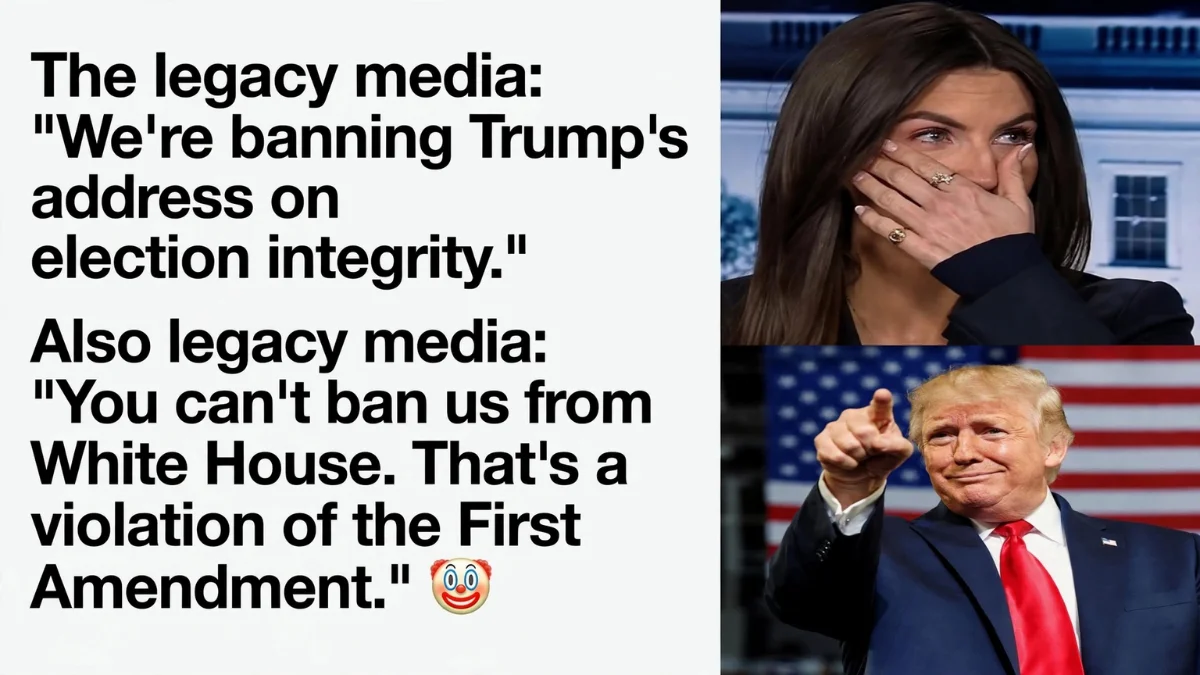
A viral post accuses the “legacy media” of hypocrisy — declining to air a Trump speech, then crying censorship when Trump barred reporters from the White House. The two events are real, though they happened months apart. Here’s the full timeline.
Event One: The Networks Skip Trump’s Speech (July 2026)
In July, President Trump delivered a primetime address from the East Room on what the White House billed as “election integrity.” ABC, NBC and CNN declined to carry it live in full, instead offering delayed or partial coverage. Network sourcing indicated the decision reflected past instances where the administration’s election claims required real-time fact-checking. Trump responded by saying the networks should lose their broadcast licenses, and Rep. Buddy Carter asked the FCC to review whether ABC, NBC and CBS had violated their public-interest obligations.
Event Two: The White House Bars News Organizations (September 2026)
Weeks later, the Trump administration withdrew White House press credentials from three news organizations. The move prompted an unusual show of unity among competing networks, several of which condemned the decision publicly. Most media and legal observers expected the outlets to win any court challenge and regain access. Notably, the episode unfolded without a sitting press secretary in place, after Karoline Leavitt’s resignation earlier in the summer.
Two Different Kinds of Access
These aren’t quite the same issue, even though they get compared. A private broadcaster choosing not to air a presidential speech is an editorial decision protected by the same First Amendment the networks invoke. The White House revoking a reporter’s building access is a government action against the press, which courts have historically treated differently — press credentials, once granted, generally can’t be pulled without due process.
The Arguments on Both Sides
Supporters of the administration argue networks used editorial discretion to selectively silence a president while claiming free-speech protections for themselves. Press freedom advocates argue government-controlled access to the White House isn’t comparable to a private network’s programming choices, and that pulling credentials is government retaliation against critical coverage.
The Bottom Line
Both events happened. Whether they add up to hypocrisy depends on whether you see broadcast editorial choices and White House credential decisions as the same kind of “access” — legally and historically, they aren’t treated as such.
Sources: Fox News, Axios, Poynter, The Washington Post, The Hill