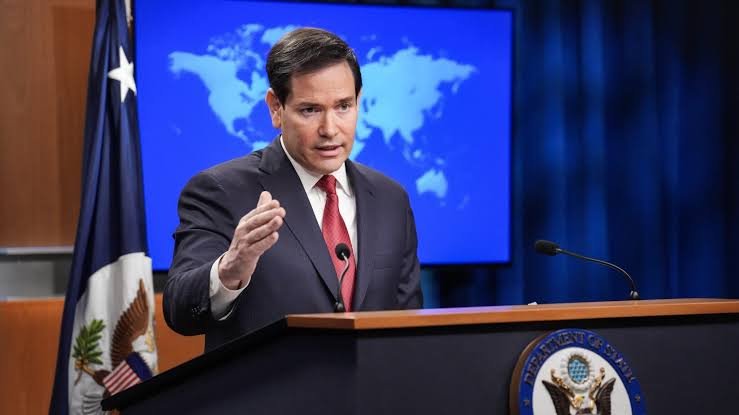
U.S. Secretary of State Marco Rubio dismissed fears of a coordinated cyberattack following major disruptions across the FAA, Microsoft, Apple, U.S. banks, and the NSA, stating there is “zero evidence” linking the incidents.
Marco Rubio Says U.S. Is Not ‘Under Systemic Attack’ After Series of Major Tech Outages
MANILA, Philippines — U.S. Secretary of State Marco Rubio pushed back against growing public anxiety on Wednesday, assuring Americans that the United States is “not under systemic attack” following a rapid succession of high-profile technical failures across aviation, banking, software platforms, and federal intelligence networks.
Speaking to reporters in Manila while traveling alongside President Donald Trump for regional diplomatic meetings, Rubio emphasized that federal investigators have found no connection between the disruptions and no sign of hostile foreign or criminal activity.
“We are not under systemic attack,” Rubio stated. “We have zero evidence or any reason to believe that any of these isolated or individual instances have anything to do with nefarious actors, with cyber hackers, with criminals, with another nation-state, with a malign actor of any kind.”
A Week of Widespread Infrastructure Disruptions
Rubio’s remarks come after nearly a week of cascading technical glitches that fueled speculation online about a coordinated digital strike against critical U.S. infrastructure. Over the past several days, multiple vital systems experienced major service interruptions:
- Nationwide Air Travel: On Friday, November 13, the Federal Aviation Administration (FAA) issued a four-and-a-half-hour nationwide ground stop after a communications failure disrupted radar and pilot communications, stranding thousands of passengers. Transportation Secretary Sean Duffy attributed the incident to a newly installed router overloading air traffic control networks. United Airlines also resolved a separate internal system outage that briefly delayed departures.
- Major Tech Platforms: Microsoft suffered a near-24-hour global disruption affecting Outlook, Teams, and Microsoft 365 services, which the company traced to a technical software issue rather than malicious activity. Apple similarly experienced service interruptions across iCloud and Apple Pay following an internal software update.
- Banking and Payment Networks: On Monday, customers at major financial institutions—including JPMorgan Chase—alongside users of the payment platform Zelle reported difficulties accessing accounts and processing transfers. JPMorgan Chase confirmed the issue stemmed from a software bug and restored normal operations by Tuesday.
- National Security Agency (NSA): On Tuesday, the NSA’s classified internal communications network, NSANet, experienced temporary degradation during scheduled routine maintenance. Agency officials confirmed that redundant infrastructure kept all mission-critical operations intact.
Administration Officials Urge Calm Amid Infrastructure Scrutiny
Other top administration officials echoed Rubio’s assessment that the back-to-back outages were coincidental operational failures rather than an act of cyber warfare. Homeland Security Secretary Markwayne Mullin told CNBC that federal authorities were certain no coordinated cyber threat was underway, adding that “the homeland is very secure”.
President Trump also downplayed the disruptions earlier in the week, characterizing technical glitches as an inevitable reality of running large, complex systems. When pressed by reporters on whether artificial intelligence tools played a role in the failures, Rubio declined to speculate, noting that each incident had a distinct technical root cause being addressed by the respective agencies and private companies.
While cybersecurity analysts agree there is no evidence of a single coordinated attack, several experts note that the cluster of failures highlights the growing fragility of aging digital infrastructure and the risks associated with rapid software updates across interconnected networks.