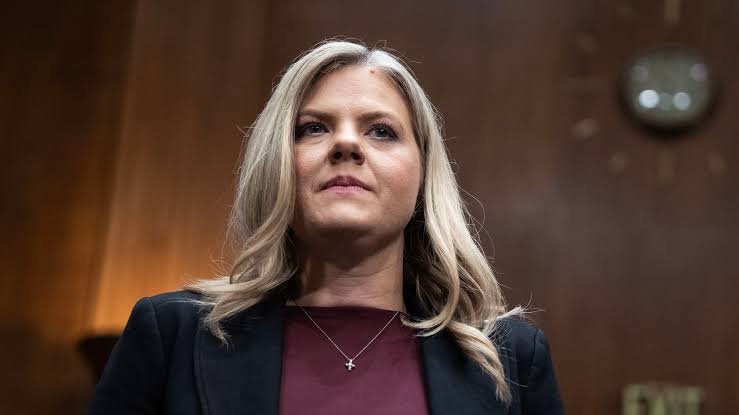
Facing razor-thin Senate math and opposition from key Republicans over vaccine policy and management experience, the Trump administration has dropped Dr. Heidi Overton as its pick to lead the Food and Drug Administration.
White House Withdraws Dr. Heidi Overton’s FDA Nomination Hours Before Key Senate Committee Vote
WASHINGTON — The Trump administration abruptly withdrew Dr. Heidi Overton’s nomination to serve as commissioner of the Food and Drug Administration late Tuesday night, canceling her path forward just hours before a critical Senate panel was scheduled to vote on advancing her candidacy.
The last-minute retreat underscores the narrowing window facing White House officials as they race to confirm executive branch nominees before Democrats assume control of the Senate in January following the November midterm elections. According to a senior administration official, Overton simply lacked the votes on Capitol Hill needed to survive Wednesday’s scheduled markup in the Senate Health, Education, Labor, and Pensions (HELP) Committee.
Why Senate Support Collapsed
Because Republicans hold a slim 12–11 majority on the HELP Committee, Overton could not afford a single GOP defection with every committee Democrat expected to oppose her. However, key moderate Republicans—including Sens. Susan Collins of Maine and Lisa Murkowski of Alaska—remained uncommitted heading into Wednesday’s session.
Even more damaging was persistent skepticism from HELP Committee Chairman Sen. Bill Cassidy (R-La.), a physician who had publicly questioned Overton’s qualifications from the day President Donald Trump tapped her in August.
During a contentious September confirmation hearing and in public statements leading up to Tuesday’s withdrawal, senators zeroed in on three primary concerns:
- Vaccine Policy Independence: Cassidy previously described Overton’s backing of Trump’s executive order to split up combination childhood shots—such as the measles, mumps, and rubella (MMR) vaccine—as “almost disqualifying”. Lawmakers pressed her on whether she would uphold peer-reviewed scientific standards if pressured by the White House or Health and Human Services Secretary Robert F. Kennedy Jr.
- Management Experience: Critics argued that Overton, who served as deputy director of the White House Domestic Policy Council and previously held a policy role at the America First Policy Institute, lacked the executive background required to oversee an agency of roughly 18,000 employees recovering from widespread departures and internal morale challenges.
- Reproductive Health Stances: Democratic lawmakers scrutinized Overton’s prior statements characterizing the abortion medication mifepristone as dangerous, pressing her on whether she would seek to restrict access or alter the drug’s FDA-approved labeling.
Leadership Vacuum Continues at the FDA
Overton’s withdrawal leaves the nation’s top food and drug regulator without a permanent Senate-confirmed leader for the foreseeable future. The agency has been run on an acting basis by Kyle Diamantas, a former food regulation official, since former FDA Commissioner Dr. Marty Makary stepped down in May.
With fewer than two months remaining before the new Democratic Senate majority is sworn in, administration allies are weighing whether to quickly nominate an alternative candidate who could win swift confirmation—with outgoing Kansas Republican Sen. Roger Marshall, an obstetrician who lost his re-election bid earlier this month, floated in Washington circles as a potential contender. However, Cassidy signaled earlier this week that confirming any permanent commissioner before January will be an uphill battle, raising the likelihood that the FDA’s top post will remain unresolved until the new Congress convenes.