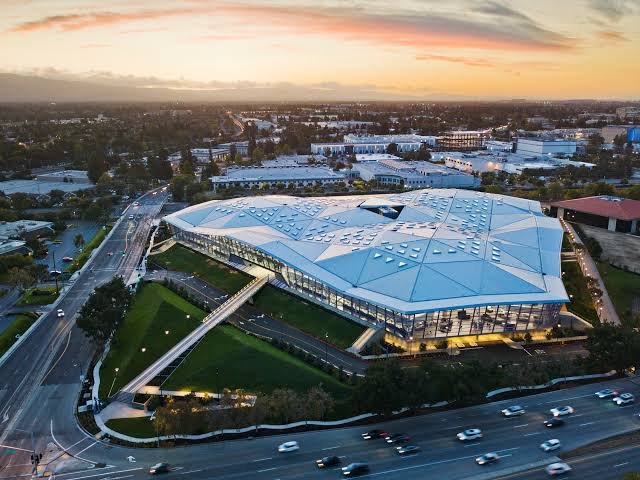
Following Jensen Huang’s sudden resignation and a $573 billion market shakeup, we break down why Nvidia and its longtime co-founder sit at the financial, industrial, and geopolitical center of the American economy.
How Important Are Nvidia and Jensen Huang to the U.S. Economy?
SANTA CLARA, Calif. — Few corporate shakeups have ever rattled Washington and Wall Street simultaneously the way Jensen Huang’s abrupt resignation as chief executive of Nvidia did last week. Within days of the announcement—and amid an ongoing investigation into alleged chip-diversion links—roughly $573 billion in market value evaporated, prompting U.S. Treasury Secretary Scott Bessent and President Donald Trump to weigh in on who should lead the semiconductor giant next.
The political and financial uproar underscores an extraordinary reality: over the past several years, Nvidia and its co-founder have grown from a specialized Silicon Valley graphics chipmaker into a foundational pillar of the United States economy.
1. An Unmatched Engine of Wall Street and Retirement Wealth
By any financial metric, Nvidia carries systemic weight across American capital markets. Even after recent volatility, the company commands a market capitalization of roughly $3.66 trillion to $3.75 trillion—making it the third most valuable corporation in the United States, after previously becoming the first company in history to surpass $4 trillion and $5 trillion milestones.
Because Nvidia is a heavyweight component of the S&P 500, the Nasdaq-100, and the Dow Jones Industrial Average, its stock performance directly shapes the 401(k) accounts, pension funds, and index portfolios of tens of millions of American households. According to market research from Charles Schwab, Nvidia and memory maker Micron together accounted for approximately one-third of all aggregate S&P 500 earnings growth in 2026. In fiscal year 2026 alone, Nvidia generated $215.9 billion in revenue and $120.1 billion in net income with a workforce of roughly 42,000 employees.
2. The Backbone of the U.S. Artificial Intelligence Boom
Beyond stock indices, Nvidia’s hardware and software form the physical infrastructure powering America’s multi-hundred-billion-dollar artificial intelligence buildout.
- Hardware Dominance: Nvidia supplies the vast majority of advanced graphics processing units (GPUs) required by U.S. hyperscalers—including Microsoft, Alphabet, Meta, and Amazon—to train and run frontier AI models, while also holding over 90% of the discrete desktop and laptop GPU market.
- The CUDA Software Moat: Long before generative AI became a household phrase, Huang bet the company’s future on CUDA, a proprietary software platform that locks developers, universities, and enterprise researchers into Nvidia’s ecosystem.
- Capital Spillover: Under Huang’s leadership, Nvidia also acted as a major venture backer across the domestic tech sector, committing tens of billions of dollars to U.S. AI labs—including Anthropic—and fueling massive data center construction across American states.
3. Why Jensen Huang’s Leadership Became a National Security Issue
While interim CEO and longtime CFO Colette Kress is guiding the company through its third-quarter earnings cycle, economists and industry analysts note that Huang’s departure—and his public signal that he would be honored to return—carries unique consequences.
Since co-founding Nvidia in a San Jose Denny’s in 1993, Huang served as its sole CEO for 33 years, a tenure virtually unheard of in Silicon Valley. Analysts credit his rare blend of chip-engineering fluency and commercial foresight with persuading global supply chains—most notably Taiwan Semiconductor Manufacturing Company (TSMC)—to scale up next-generation fabrication capacity.
At the same time, Nvidia sits squarely at the intersection of U.S.-China geopolitical competition. Washington relies on Nvidia to maintain American technological supremacy in artificial intelligence, yet federal lawmakers and intelligence agencies tightly police export controls to prevent advanced chips from reaching Beijing.
The Bottom Line for American Markets
Whether Huang ultimately returns to the helm or an outside successor is appointed, Nvidia’s trajectory remains tightly bound to broader U.S. economic health. A slowdown in Nvidia’s data center demand or prolonged disruption in its leadership would ripple outward—impacting semiconductor suppliers, utility and construction firms building American power grids, and investor confidence across Wall Street.