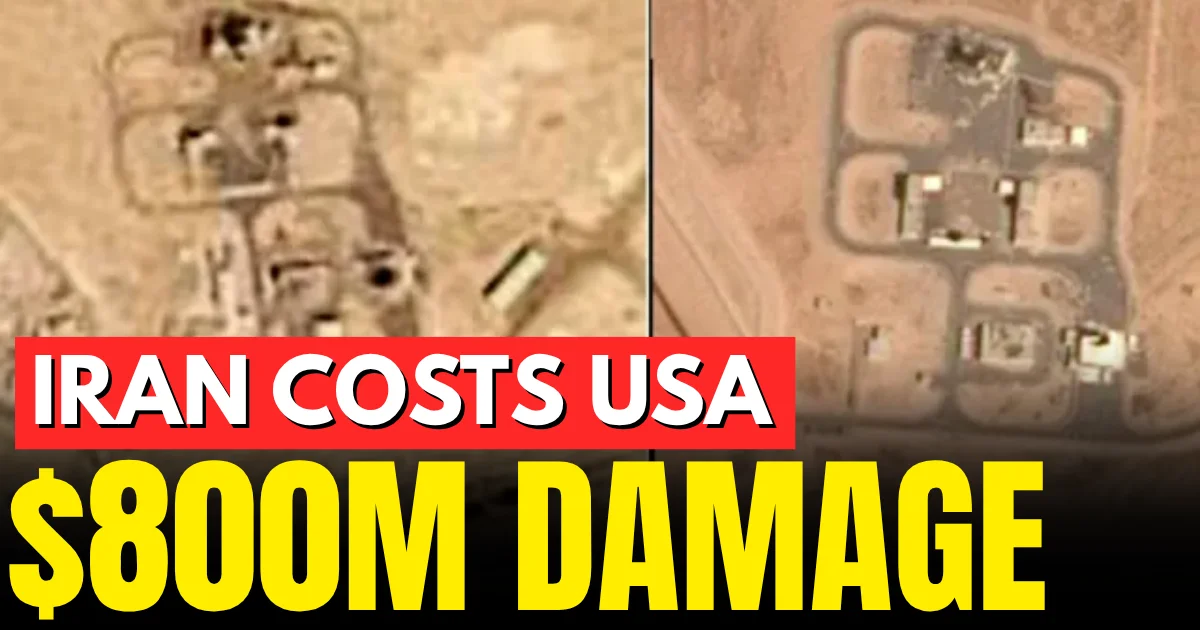
Iranian retaliatory strikes caused $800M damage to US bases in Middle East. Thaad radar destroyed, 13 troops killed. Full damage analysis here.
Table of Contents
Iranian Strikes on US Bases Caused $800M in Damage, Analysis Shows
Introduction
Iranian retaliatory strikes on military bases used by the US in the Middle East caused approximately $800 million in damage during the first two weeks of conflict, according to new analysis by the Center for Strategic & International Studies (CSIS) and BBC. The damage—higher than previously reported—includes destruction of a $485 million Thaad radar system in Jordan and over $310 million in facility damage across the region. With 13 US service members killed and the Pentagon requesting $200 billion in additional war funding, the steep costs reveal the financial toll of the escalating US-Israel-Iran conflict.
The $800M Damage Breakdown
Key Numbers
Total estimated damage: $800 million (£600 million)
Timeframe: First two weeks of war
Major components:
- AN/TPY-2 Thaad radar system (Jordan): ~$485 million
- Buildings, facilities, infrastructure: ~$310 million
- Additional radar/satellite systems: Cost unclear (still being assessed)
Source: CSIS report + BBC analysis
What Is the Thaad Radar System?
The $485M Asset Destroyed
AN/TPY-2 radar:
- Cost: Approximately $485 million (per CSIS defense budget document review)
- Function: Long-range interception of ballistic missiles
- Part of: Terminal High Altitude Area Defense (Thaad) system
- Location hit: Air base in Jordan
Strategic impact:
- Loss of critical missile defense capability
- Degraded early-warning systems
- US forced to redeploy Thaad components from South Korea to Middle East
Targeted Bases & Repeat Strikes
Three Bases Hit Multiple Times
BBC Verify satellite imagery analysis confirms Iran struck at least three air bases more than once:
- Ali Al-Salim Air Base (Kuwait)
- Fresh damage in different conflict phases
- Radar sites targeted
- Al-Udeid Air Base (Qatar)
- Multiple strike phases visible
- US Central Command operations hub
- Prince Sultan Air Base (Saudi Arabia)
- US aircraft stationed there
- Radar component for Thaad system hit
- Satellite imagery shows smoke rising from radar site
Significance: Repeat strikes show Iran’s deliberate targeting of specific US assets, not random attacks.
Countries & Locations Hit
Regional Spread of Damage
Confirmed strike locations:
- Jordan: Thaad radar destroyed
- United Arab Emirates: Extensive Thaad system damage
- Kuwait: Camp Arifjan radar sites hit
- Saudi Arabia: Prince Sultan Air Base radar damaged
- Bahrain: US naval base struck (radome destruction)
- Qatar: Al-Udeid Air Base (multiple strikes)
- Other Middle East countries: Not publicly specified
Iran’s Strategic Targeting
What Iran Aimed For
Primary targets:
- Air-defense systems
- Thaad missile defense batteries
- Radar components
- Early warning systems
- Satellite communication systems
- Eyes and ears of modern military operations
- Command and control infrastructure
- Radar installations
- At least 5 bases had radar systems struck
- Two radomes (protective enclosures) destroyed at Bahrain naval base
- Systems themselves “highly probable” damaged
Mark Cancian (CSIS senior adviser): “The damage to US bases in the region has been underreported. Although that appears to be extensive, the full amount won’t be known until more information is available.”
Satellite Imagery Evidence
What BBC Verify Found
Bahrain US Naval Base:
- Destruction of two radomes clearly visible
- Protective enclosures for sensitive radar/satellite equipment
- Systems inside “highly probable” damaged (extent unknown)
Prince Sultan Air Base (Saudi Arabia):
- Smoke rising from Thaad radar component
- Direct hit confirmed via imagery
Multiple bases:
- Fresh damage appearing in different phases of conflict
- Evidence of targeted, repeated strikes
Limitation: Major US-based satellite imagery providers have imposed restrictions on image release, hampering full damage assessment.
US Casualties
Human Cost
Military deaths: 13 US service members killed (since Feb 28 start of conflict)
Overall death toll (per Human Rights Activists News Agency – Hrana):
- Nearly 3,200 total deaths
- 1,400 civilians
Total War Costs to US
Beyond the $800M
First 6 days: $11.3 billion (per Defense Dept briefing to Congress)
First 12 days: $16.5 billion (per CSIS)
Infrastructure damage: $800 million (confirmed so far)
Pentagon funding request: $200 billion additional
Defense Secretary Pete Hegseth (Thursday):
- $200 billion figure “could move”
- “It takes money to kill bad guys”
Note: $800M in base damage represents only a fraction of total war costs.
Russian Intelligence Support to Iran
How Iran Knew Where to Strike
Reported: Russia has shared intelligence with Tehran on American military forces in region
Impact:
- Precise targeting of US assets
- Repeat strikes on same bases
- Knowledge of radar/satellite system locations
Strategic implication: Iran not acting alone—coordination with Russian intelligence enables effective targeting.
Pentagon & Central Command Response
Official Silence
BBC request for comment:
- US Department of Defense referred to US Central Command
- Central Command officials declined to comment
Why the silence:
- Operational security concerns
- Avoiding disclosure of full damage extent
- Potential embarrassment over losses
Public acknowledgment: None from official military sources on $800M figure.
What Systems Were Damaged
Detailed Breakdown
Confirmed damage:
- Thaad radar (Jordan): $485M
- Radomes (Bahrain): 2 destroyed
- Radar sites (Kuwait, Saudi Arabia): Multiple hits
- Thaad components (UAE, Jordan): Extensive damage
- Buildings/facilities: $310M across region
- Satellite communication systems: Extent unclear
Assessment challenge: Full cost “won’t be known until more information is available” per CSIS.
Thaad Redeployment from South Korea
Strategic Consequences
Action taken:
- US redeployed Thaad components from South Korea to Middle East
- Necessary due to degradation of systems in region
Implications:
- Weakened missile defense in East Asia
- North Korea threat coverage reduced
- Resources stretched across multiple theaters
Trump’s Assessment of War Progress
White House Position
Trump statement (Friday at White House event):
“We’re doing extremely well in Iran.”
Stated goals:
- Destroy Iran’s nuclear program
- Degrade conventional military power
- End regime support for proxy groups
Trump claim: US “on track” to achieve all objectives.
Economic & Strategic Impact
Global Consequences
Strait of Hormuz:
- Near-closure of critical shipping channel
- Global oil supply threatened
Economic uncertainty:
- Duration of conflict unknown
- Potential ground troop deployment
- Global markets rattled
Military uncertainty:
- Will Trump deploy ground forces?
- How long will air campaign continue?
- What are Iran’s remaining retaliatory capabilities?
War Timeline
Key Dates
- February 28: US and Israel launch attacks on Iran
- Week 1: Initial Iranian retaliatory strikes (majority of $800M damage)
- First 6 days: $11.3 billion in total US war costs
- First 12 days: $16.5 billion in total costs
- Week 2: Continued Iranian strikes on repeat targets
- Thursday (recent): Pentagon requests $200B additional funding
- Friday (recent): Trump claims war going “extremely well”
CSIS Analysis Methodology
How Damage Was Assessed
Sources:
- Defense Department budget documents
- Satellite imagery analysis
- Open-source intelligence
- Military asset cost databases
Co-author: Mark Cancian, CSIS senior adviser
Limitation: “Full amount won’t be known until more information is available”
Why underreported: Pentagon hasn’t publicly disclosed comprehensive damage assessments.
FAQ Section
How much damage did Iranian strikes cause to US bases?
Iranian strikes caused approximately $800 million in damage to US military bases in the Middle East during the first two weeks of conflict, according to CSIS analysis. This includes a $485 million Thaad radar system destroyed in Jordan and $310 million in facility damage across the region.
What is the Thaad radar system Iran destroyed?
The AN/TPY-2 radar is part of the Terminal High Altitude Area Defense (Thaad) system, costing approximately $485 million. It provides long-range interception of ballistic missiles. Iran destroyed one at a US air base in Jordan, forcing redeployment of Thaad components from South Korea.
Which US bases did Iran strike?
Iran struck bases in Jordan, UAE, Kuwait (Camp Arifjan), Saudi Arabia (Prince Sultan Air Base), Bahrain (US naval base), and Qatar (Al-Udeid). BBC satellite analysis confirmed at least three bases—Ali Al-Salim (Kuwait), Al-Udeid (Qatar), and Prince Sultan (Saudi Arabia)—were hit multiple times.
How many US troops have been killed in the Iran conflict?
Thirteen (13) US military service members have been killed since the US and Israel launched attacks on Iran on February 28. Overall death toll has reached nearly 3,200, including 1,400 civilians, according to Human Rights Activists News Agency.
How much is the Iran war costing the US?
The first 6 days cost $11.3 billion, and the first 12 days cost $16.5 billion, according to CSIS. The Pentagon is requesting an additional $200 billion in war funding. The $800 million in base damage represents only a fraction of total costs.
Did Russia help Iran target US bases?
Yes. Russia has reportedly shared intelligence with Tehran on American military forces in the region, enabling Iran’s precise targeting and repeat strikes on the same bases. This explains Iran’s effective targeting of specific radar and satellite systems.