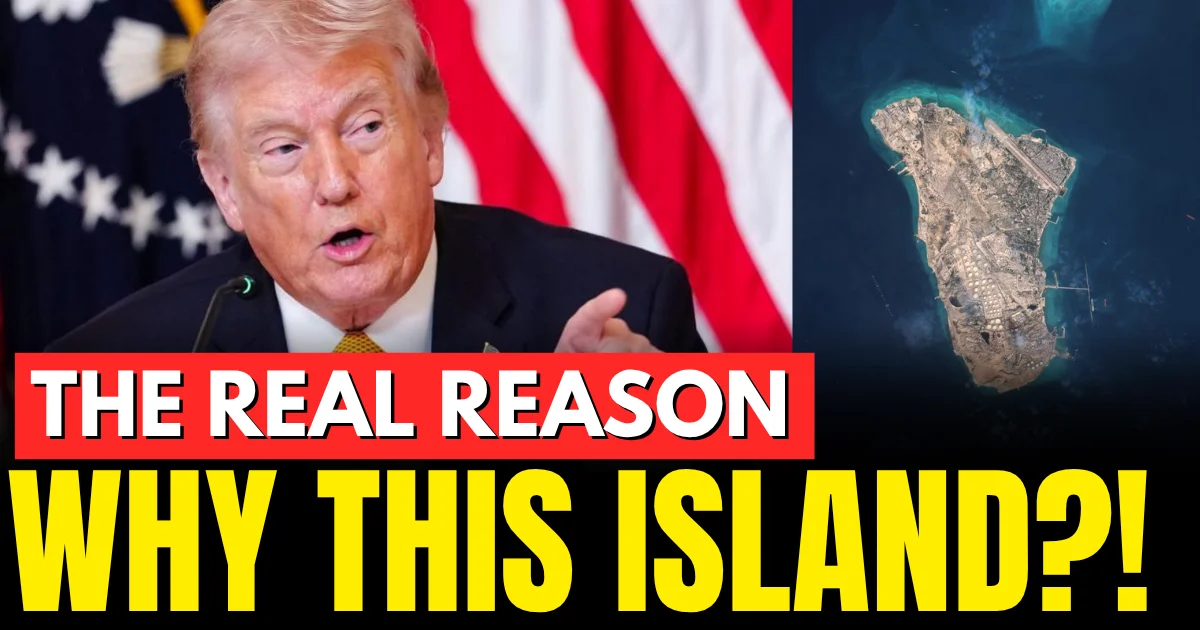
Trump eyes occupying Kharg Island—Iran’s economic lifeline handling 90% of crude oil exports. Military plans, Strait of Hormuz impact explained.
Table of Contents
Why Does the US Have Iran’s Kharg Island in Its Sights?
Introduction
President Donald Trump is threatening to occupy or blockade Kharg Island—a small Iranian outcrop that handles 90% of Iran’s crude oil exports. After bombing the island’s military facilities on March 13 while deliberately sparing oil infrastructure, Trump now warns he could destroy pipelines “on five minutes’ notice.” With the US considering ground troop deployment and Iran threatening retaliation against energy infrastructure across the Middle East, the tiny island has become the economic flashpoint in escalating US-Iran tensions over control of the Strait of Hormuz.
Kharg Island: Iran’s Economic Jugular
The Numbers
Size: 15 nautical miles (24km) off Iran’s coast
Oil export percentage: 90% of Iran’s crude oil
Capacity: Very large tankers carrying up to 85 million gallons per vessel
Primary buyer: China
Revenue beneficiary: Islamic Revolutionary Guard Corps (IRGC)
Strategic value: Iran’s single most critical economic asset
Why Kharg Matters
Geographic Advantage
Deep water access:
- Island coast reaches deep waters
- Mainland coast too shallow for large tankers
- Allows direct loading of super-tankers
Pipeline system:
- Oil transported through pipes from mainland
- Connects to 90% of Iran’s crude production
- Single point of failure for entire export system
Export route:
- Tankers load at island’s long jetties
- Travel south through Persian Gulf
- Exit via Strait of Hormuz
- Deliver to China (main customer)
March 13 US Attack: What Happened
Trump’s Statement
Quote: US Central Command “executed one of the most powerful bombing raids in the History of the Middle East and totally obliterated every MILITARY target in Iran’s crown jewel, Kharg Island.”
Key decision: “For reasons of decency” chose “NOT to wipe out the Oil Infrastructure on the Island.”
US Central Command Details
Targets struck:
- 90+ Iranian military targets
- Naval mine storage facilities
- Missile storage bunkers
- Air defense systems
- Naval base
- Airport control tower
- Helicopter hangar
Deliberately spared: Oil export infrastructure and pipelines
Iran’s Response
Official Statements
Ehsan Jahanian (political deputy, Bushehr province):
Oil export process “fully under way” and “continuing without interruption” (per IRGC-affiliated Tasnim)
Iranian military warning:
Oil and energy infrastructure of firms working with US would “immediately be destroyed and turned into a pile of ashes” if energy facilities attacked
Iranian state media: No damage to oil facilities confirmed
US Occupation Plans
Axios Report (Friday)
Sources: Four officials with knowledge of the issue
Options under consideration:
- Occupy Kharg Island
- Blockade the island
Purpose: Pressure Iran to reopen Strait of Hormuz
Military preparations:
- Pentagon made detailed preparations for ground force deployment
- 2,500 Marines preparing for regional deployment (Reuters)
- Warships positioning in area
White House Official Statement
BBC Response
Quote: “The United States Military can take out Kharg Island at any time.”
Trump position:
- No plans to send troops currently
- “Retains all options as Commander-in-Chief”
- Can destroy pipelines “on five minutes’ notice”
Trump warning (March 16):
“We can do that on five minutes’ notice. It’ll be over. Just one simple word, and the pipes will be gone too. But it’ll take a long time to rebuild that.”
Military Analysis: Can the US Seize It?
Expert Assessment
Aaron Maclean (School of War podcast host, CBS national security analyst):
Island could be seized and “used as leverage” to force Iran to keep Strait of Hormuz open
Mikey Kay (BBC Security Brief analyst):
Taking island would “cut off the IRGC’s economic lifeline, affecting its ability to conduct war”
Operational Challenges
Size of operation: Relatively small force needed
Complexity:
- Landing force must travel considerable distances
- Options: Naval vessels or airborne assault
- Distance from US bases/carriers
- Defended Iranian territory
Strategic value:
- Chokes off 90% of Iran’s oil exports
- Platform for attacks against mainland
- Permanent pressure point on Iranian economy
The Strait of Hormuz Factor
Why It Matters
Global importance: One of world’s most critical shipping channels
Location: South of Iran’s coast
Iran’s threats: Continued warnings to attack ships attempting passage
US objective: Force Iran to guarantee safe passage
Leverage strategy: Hold Kharg hostage to keep Hormuz open
Why Trump Hasn’t Hit Oil Infrastructure (Yet)
Strategic Calculations
Stated reason: “Decency” and avoiding long-term economic damage
Real considerations:
- Global oil prices: Would soar dramatically
- Regional escalation: Iran would target Gulf neighbors’ energy infrastructure
- Desalination plants: Iran could destroy facilities providing drinking water to millions
- Drone warfare: Iran still capable of launching “large numbers of low-cost, high-explosive drones”
- Shipping attacks: Expanded targeting of vessels throughout region
Economic Impact of Kharg Shutdown
What Would Happen
Immediate effects:
- 90% of Iran’s oil exports halted
- China loses major crude supplier
- Global oil prices spike
- IRGC funding severely reduced
Long-term consequences:
- Pipeline reconstruction: Months to years
- Terminal rebuilding: Extensive timeline
- Iran’s economy crippled
- Regional oil market disruption
Trump’s assessment: “It’ll take a long time to rebuild that”
Iran’s Retaliatory Capabilities
Military Options
Current capacity (3 weeks into conflict):
Drone attacks:
- Large numbers available
- Low-cost, high-explosive
- Target: Gulf Arab neighbors
- Target: Shipping vessels
Infrastructure targets:
- Desalination plants (drinking water for millions)
- Oil facilities in Saudi Arabia, UAE
- Shipping infrastructure
- US military bases
Strategic warning: Iran still has asymmetric warfare capabilities despite US strikes
Timeline of Escalation
Key Dates
- March 13: US bombs military targets on Kharg Island
- March 13: Trump announces oil infrastructure deliberately spared
- March 16: Trump warns pipelines could be destroyed “on five minutes’ notice”
- Recent weeks: US military preparing 2,500 Marine deployment
- Friday (recent): Axios reports occupation/blockade plans under consideration
- Ongoing: Iran continues threatening ships in Strait of Hormuz
Pentagon & White House Stance
Official Position
Declined to comment on:
- Specific troop deployments
- Detailed operational plans
- Timeline for potential action
Repeatedly stated:
- All options remain on the table
- President has full authority as Commander-in-Chief
- Can act at any moment
Global Oil Market Implications
Economic Risks
If Kharg oil infrastructure destroyed:
- 90% of Iranian exports offline immediately
- Supply shock to global markets
- Price spike (extent depends on Saudi/UAE spare capacity)
- China seeks alternative suppliers
- Increased pressure on OPEC
If US occupies island:
- Ongoing uncertainty
- Potential for gradual oil release
- Leverage tool in negotiations
- Markets price in geopolitical risk premium
What Happens Next
Possible Scenarios
Scenario 1: Continued military-only strikes
- Oil infrastructure remains untouched
- Pressure through military degradation
- Economic leverage preserved
Scenario 2: Pipeline destruction
- Quick operation (“five minutes”)
- Iran’s economy crippled long-term
- Global oil crisis triggered
- Regional war likely escalates
Scenario 3: Island occupation
- Marines deploy to seize island
- US controls oil exports
- Leverage to force Hormuz reopening
- Potential Iranian attacks on regional infrastructure
FAQ Section
Where is Kharg Island and why is it important?
Kharg Island is located 15 nautical miles (24km) off Iran’s coast in the Persian Gulf. It handles 90% of Iran’s crude oil exports—making it the country’s single most critical economic asset and primary revenue source for the Islamic Revolutionary Guard Corps (IRGC).
Did the US already bomb Kharg Island?
Yes. On March 13, the US struck over 90 military targets on Kharg Island including naval facilities, missile storage, and air defenses. Trump deliberately spared oil infrastructure but warned he could destroy pipelines “on five minutes’ notice.”
Is the US planning to occupy Kharg Island?
According to Axios (citing four sources), the Trump administration is considering plans to occupy or blockade Kharg Island to pressure Iran to reopen the Strait of Hormuz. The Pentagon has prepared detailed plans for ground force deployment, and 2,500 Marines are preparing for regional deployment.
How much of Iran’s oil goes through Kharg Island?
Ninety percent (90%) of Iran’s crude oil exports flow through Kharg Island’s terminal. The oil is piped from the mainland to the island, where very large tankers (carrying up to 85 million gallons) load it for export, primarily to China.
What would happen to oil prices if Kharg is destroyed?
Destroying Kharg’s oil infrastructure would likely cause global oil prices to soar by removing 90% of Iranian exports from the market. The exact impact would depend on whether Saudi Arabia and UAE increase production and how Iran retaliates against regional energy infrastructure.
Why hasn’t Trump destroyed Kharg’s oil infrastructure yet?
Trump stated he chose not to destroy oil facilities “for reasons of decency” and to avoid irreparable long-term damage to Iran’s economy. Military analysts suggest he’s also avoiding a global oil crisis and preventing Iranian retaliation against Gulf neighbors’ critical infrastructure like desalination plants.