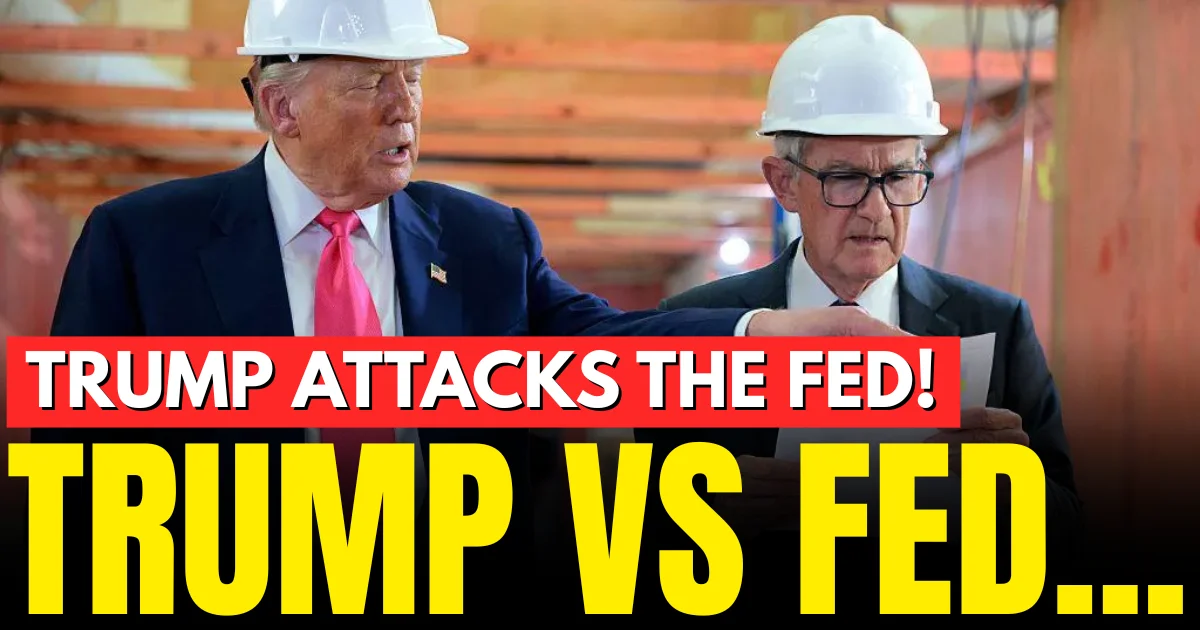
Trump’s Federal Reserve pressure mirrors emerging market crises. Experts warn of inflation risks and institutional erosion. Full analysis inside.
Table of Contents
Trump’s Federal Reserve Confrontation Echoes Troubling Emerging Market Patterns
Donald Trump’s escalating pressure campaign against America’s central bank has triggered alarming comparisons to economic crises in Argentina and Turkey. Former central bankers and leading economists now draw direct parallels between Washington’s current turmoil and institutional breakdowns that devastated developing economies.
This unprecedented confrontation between presidential power and monetary independence raises fundamental questions about American economic stability.
Crisis Comparison Overview
| Country | Leader | Central Bank Conflict | Outcome |
|---|---|---|---|
| Argentina (2010) | Cristina Kirchner | Fired bank chief over reserves | Currency collapse, persistent inflation |
| Turkey (2019-2021) | Recep Erdogan | Cycled through 3 bank leaders | Inflation exceeded 50% |
| United States (2025) | Donald Trump | Pressuring Fed chair, DOJ probe | Developing situation |
Argentina’s Warning From the Past
A former Argentine central banker watches American developments with unsettling recognition.
Martin Redrado’s Experience
| Element | Details |
|---|---|
| Position | Central Bank President, Argentina |
| Conflict year | 2010 |
| President | Cristina Kirchner |
| Dispute | Refused handing over reserves for debt payments |
| Initial outcome | Fired from position |
| Legal result | Won court challenge |
| Final decision | Resigned citing “intolerable” pressure |
Long-Term Argentine Consequences
That confrontation became an early indicator of devastating economic instability.
Aftermath effects:
- Severe currency devaluation
- Persistent high inflation
- Economic recovery still incomplete
- Institutional credibility damaged
Redrado’s Assessment of American Situation
The former banker expressed surprise at witnessing similar patterns in the United States.
His observation:
Current American developments resemble emerging market storylines rather than expected behavior from the global economic model nation.
Trump’s Multi-Front Fed Offensive
Presidential pressure on America’s monetary authority extends beyond verbal criticism.
Attack Vectors Employed
| Method | Target | Status |
|---|---|---|
| Social media criticism | Jerome Powell | Ongoing |
| Firing attempt | Lisa Cook (policymaker) | Supreme Court challenge pending |
| DOJ criminal probe | Fed property renovation costs | Active investigation |
| Public statements | Interest rate policy | Continuous |
Presidential Accusations Against Powell
Trump has leveled multiple charges against the sitting Fed chairman.
Core criticisms:
- Economic mismanagement allegations
- Government borrowing costs increased unnecessarily
- Interest rates maintained excessively high
- Debt burden worsened
Powell’s Response to Criminal Investigation
The Fed chair characterized Justice Department scrutiny as manufactured justification.
Powell’s position:
Renovation cost concerns serve merely as “pretext” for broader interference objectives.
What Prominent Economists Are Saying
Leading financial voices have issued stark warnings about current trajectory.
“Banana Republic” Comparisons
| Expert | Former Role | Assessment |
|---|---|---|
| Jason Furman | Obama Council of Economic Advisers Chair | “This is what you do in banana republics” |
| Janet Yellen | Fed Chair, Biden Treasury Secretary | “Road to a banana republic” |
Academic Research Findings
Economist Carola Binder from University of Texas at Austin conducted extensive analysis.
Study parameters:
- Examined 118 countries
- Period: 2010-2018
- Focus: Political pressure on central banks
Key findings:
| Finding | Implication |
|---|---|
| 10% of central banks faced annual political pressure | Widespread phenomenon |
| Nationalist/populist leaders most likely sources | Pattern identification |
| Higher inflation typically followed interference | Causal relationship |
| Even resisted pressure caused inflation uptick | Expectation effects |
Turkey’s Cautionary Tale
Erdogan’s central bank interference provides another warning example.
Turkish Central Bank Turmoil Timeline
| Period | Development |
|---|---|
| 2019-2021 | Three central bank leaders cycled through |
| Erdogan’s view | Unorthodox belief that high rates cause inflation |
| Peak inflation | Exceeded 50% |
| Resolution | Eventually appointed moderate leaders |
Inflation Psychology Explanation
Binder’s research explains why even unsuccessful pressure damages economies.
Mechanism identified:
Public doubt about central bank effectiveness creates inflation expectations. These expectations become self-fulfilling as businesses and consumers adjust behavior accordingly.
Current US Economic Indicators
Market reactions and economic metrics provide mixed signals.
Dollar Performance
| Metric | Data |
|---|---|
| Dollar decline | 8% against currency basket |
| Timeframe | Past 12 months |
| Trigger event | Noticeable dip following DOJ probe announcement |
Market Sentiment Assessment
| Indicator | Current Status |
|---|---|
| Immediate market reaction | Relatively muted |
| Investor expectation | Fed continues operating freely |
| Inflation expectations | Currently contained |
| Institutional faith | Being tested |
Why Central Bank Independence Matters
Decades of economic research support keeping monetary policy separate from political control.
Historical Context
| Period | Development |
|---|---|
| 1970s | Painful global inflation episodes, including US |
| Post-1970s | Wave of central bank independence reforms |
| Academic consensus | Independence linked to lower inflation |
Political Incentive Problems
Economists identify specific risks when politicians control monetary policy.
Identified dangers:
- Short-term boost prioritization over long-term stability
- Constituency satisfaction attempts regardless of consequences
- Election cycle manipulation of interest rates
- Debt monetization temptations
Trump’s Defiant Stance
The President maintains his approach despite widespread criticism.
Presidential Position
| Statement | Context |
|---|---|
| “I think it’s fine what I’m doing” | Defending continued pressure |
| Criminal probe denial | Claims no connection to interest rate disputes |
| Expression rights | Maintains entitlement to voice opinions |
Upcoming Critical Moments
| Event | Timeline | Significance |
|---|---|---|
| Supreme Court arguments | Coming weeks | Lisa Cook firing legality |
| Powell term expiration | May 2025 | New chair appointment expected |
| Trump’s Fed chair pick | Imminent | Market-moving announcement |
How US Situation Differs From Emerging Markets
Analysts identify factors potentially limiting American fallout.
Protective Factors
| Factor | Explanation |
|---|---|
| Economic scale | Larger economy absorbs shocks better |
| Fed structure | 12-member committee sets rates |
| Appointment limits | President appoints only 7 members |
| Staggered terms | Reduces immediate political influence |
| Institutional depth | Multiple checks exist |
Structural Vulnerabilities
| Concern | Reality |
|---|---|
| Legal independence ranking | Bottom third globally |
| Independence basis | Convention more than law |
| Historical precedent | Current pressure unprecedented |
Institutional Defense Responses
Multiple power centers have pushed back against Fed interference.
Defending Voices
| Group | Response |
|---|---|
| Wall Street leaders | Forceful Fed defense statements |
| Congressional members | Including some Republicans |
| Supreme Court justices | Indicated Fed differs from other agencies |
Expert Assessment
Jennifer McKeown, chief global economist at Capital Economics, offered measured perspective.
Her analysis:
Slight concern exists but no definitive switch indicating lost institutional faith or inevitable downward spiral.
Long-Term Risk Assessment
Identifying economic damage sources proves challenging but not impossible.
Measurement Difficulties
Professor Carolina Garriga from University of Essex explains analytical challenges.
Complexity factors:
- Central bank independence erosion
- Democracy deterioration
- Rule of law weakening
- Often occur simultaneously
Clear Market Signals
Despite long-term measurement challenges, immediate reactions provide clarity.
Observable evidence:
Dollar decline following DOJ probe announcement demonstrates investor attention to central bank independence as crucial economic factor.
Redrado’s Final Warning
Argentina’s former central banker offers perspective rooted in painful experience.
His Conclusion
| Point | Statement |
|---|---|
| Hope | US institutional strength may prevail |
| Concern | Unnecessary risks being taken |
| Assessment | Trump “defeating himself” through this conflict |
| Advice | “He should know better” |
Frequently Asked Questions
Why are economists comparing Trump’s Fed pressure to Argentina and Turkey?
Former central bankers and leading economists identify similar patterns between Trump’s Federal Reserve interference and crises in Argentina (2010) and Turkey (2019-2021). Both countries experienced severe inflation and currency problems following political pressure on monetary authorities. Academic research confirms that such interference typically precedes economic instability.
What actions has Trump taken against the Federal Reserve?
Trump has pursued multiple pressure tactics beyond verbal criticism. He attempted firing policymaker Lisa Cook, which faces Supreme Court challenge. The Department of Justice launched criminal probe into Fed property renovation costs. Powell’s term expires May 2025, with Trump expected to announce replacement soon.
How does central bank independence affect inflation?
Extensive academic research links central bank independence to lower inflation over time. A study of 118 countries found that political pressure on central banks typically preceded higher inflation. Even when central banks resisted interference, inflation still rose because public expectations shifted. Politicians face incentives prioritizing short-term gains over long-term stability.
What makes the US Federal Reserve structurally different from other central banks?
The Fed uses 12-member committee for interest rate decisions. Presidents appoint only 7 members who serve long, staggered terms. However, legal independence rankings place the Fed in bottom third globally. Much independence relies on convention rather than statutory protection, creating potential vulnerability.
What economic indicators show impact from this conflict so far?
The US dollar declined 8% against major currency basket over the past year. Noticeable dip occurred following DOJ probe announcement. However, inflation expectations remain contained and immediate market reaction has been relatively muted. Analysts believe institutional faith is being tested but not yet broken.