Learn from Motorola’s failed attempt to make smartphones in the US and why skilled labor, automation, and global supply chains still dominate the tech manufacturing equation.
Table of Contents
He Tried Building Smartphones in the US Over a Decade Ago.
📱 The Ambition: Made in the USA
Back in 2013, Motorola made headlines by attempting what no major phone company had done in recent memory: assemble smartphones on American soil. Their Moto X would be proudly manufactured at a Flextronics factory in Fort Worth, Texas.
It was a bold play for patriotism. With Apple and Samsung dominating the market, Motorola needed a unique value proposition—and they bet big on “Made in the USA.”
As Dennis Woodside, then-CEO of Motorola and now CEO of Freshworks, told CNN: “There was a segment of customers that said, ‘Hey, if you produce products in the United States, I’m more likely to consider them.'”
But despite all the ambition, the plan unraveled within a year. Motorola shut the factory down by May 2014.
🧩 The Real Challenges: Cost, Labor, and Supply Chain
The effort to manufacture phones in the U.S. wasn’t just expensive—it exposed serious weaknesses in America’s readiness to compete with global tech manufacturing hubs.
💸 Labor Costs
While patriotism sells, profits matter more. Assembling phones in the U.S. brought significantly higher labor costs. Asia and South America offered far more cost-effective solutions. The economics were clear.
“There definitely were higher costs, which was challenging,” Woodside admitted.
🔗 Supply Chain Fragmentation
Even though the phones were assembled in Texas, core components—the motherboard, screen, battery—still came from suppliers in Asia. That meant long logistics chains, delayed timelines, and more cost.
“You are dealing with a supply chain that’s very fragmented,” Woodside said.
👨🏭 Labor Skill Gap
Perhaps the most surprising challenge? The people. Or rather, the lack of qualified, skilled labor willing—or able—to do the job.
“Most people were not accustomed to that kind of work at all in the US,” said Woodside. The intricate assembly required training on minute, detailed tasks. With high turnover and job alternatives like retail and food service, it was hard to attract and retain talent.
“There’s probably several hundred (phone) parts, and they’re tiny… like a super tiny Lego set,” he added.
📉 What the Numbers Say
- 📉 Motorola sold only 500,000 Moto X units in Q3 2013.
- 🏭 At peak, 2,000+ workers at the Flextronics facility were building ~100,000 phones/week.
- ❌ By mid-2014, the U.S. factory was shuttered due to unsustainable economics.
The dream was real. But the market didn’t bite. And the economics didn’t support it.
🇺🇸 Fast Forward to 2025: Trump, Tariffs & the Return of the Debate
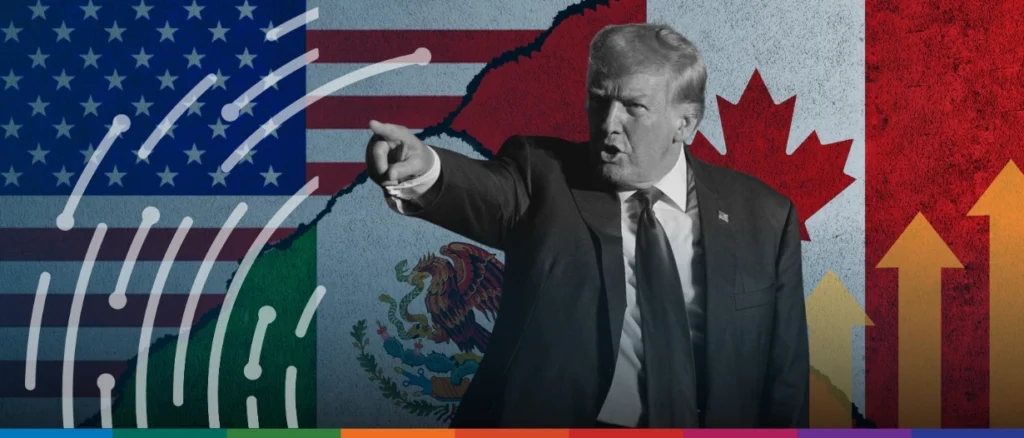
Motorola’s short-lived experiment is getting renewed attention thanks to President Donald Trump’s renewed pressure on companies like Apple and Samsung to shift manufacturing back to the U.S.
Starting August 12, steep new tariffs will hit smartphones assembled in China. India—the new top smartphone exporter to the U.S.—will also face 25% tariffs by August 7.
The goal? Force global giants to bring jobs home.
But will it work?
Woodside is skeptical.
“You have to have a very strong value proposition to the employee… and be smart about the economics if you want to stay competitive,” he said.
📊 Labor Economics: The US vs China & India
- 🇺🇸 USA:
- Lost 11,000 manufacturing jobs between June–July 2025 (BLS)
- Manufacturing labor is expensive and in short supply
- Americans increasingly uninterested in factory work (Cato 2024)
- 🇨🇳 China:
- 123 million employed in manufacturing (Economic Census 2024)
- Skilled labor pipeline, vocational education, and robotics are embedded in national policy
- Foxconn assembled 350 iPhones/minute in 2016 at its Zhengzhou facility
- 🇮🇳 India:
- Now the world’s top smartphone exporter to the U.S.
- Apple has shifted significant production to India and Vietnam
As Sujai Shivakumar of CSIS put it: “A workforce is as important as electricity and transportation infrastructure to a manufacturing strategy.”
And China has mastered that formula.
⚙️ Automation & The Future of U.S. Tech Manufacturing
While labor remains a bottleneck, the future could lie in automation. As AI and robotics evolve, fewer human workers will be needed on the line—but the remaining roles will demand new skills.
Carolyn Lee of the Manufacturing Institute notes that AI-era jobs will require proficiency in:
- 🤖 Robotics
- 💾 Coding
- 📊 Data analytics
Yet America’s fragmented vocational system is lagging behind. Unlike China’s unified, top-down approach, U.S. training programs vary by state, industry, and funding.
🧠 Final Thought
The dream of “Made in the USA” smartphones isn’t dead—but it’s no longer about nationalism. It’s about economics, skills, and scalable systems.
Motorola’s failed Moto X experiment was not a cautionary tale—it was a case study in global manufacturing reality.
So if your company plans to build smartphones in the U.S. today, here’s Dennis Woodside’s advice:
- ⚠️ Don’t underestimate the labor challenge
- 🧠 Prioritize automation and skill-based hiring
- 📉 Understand your cost structure end-to-end
- 📍 Be realistic about the global supply chain
Smartphone assembly isn’t just about putting pieces together. It’s about fitting your business into a global puzzle that never stops moving.
❓ FAQs
Q: Why did Motorola shut down its U.S. factory?
A: The Fort Worth plant faced high costs, low phone sales, labor shortages, and a fragmented supply chain.
Q: Can the U.S. realistically bring smartphone manufacturing back?
A: Only with major advances in automation, workforce training, and reshaped supply chains.
Q: Why are tariffs pushing Apple and Samsung to reconsider U.S. production?
A: New tariffs from the Trump administration aim to penalize foreign assembly and incentivize domestic manufacturing.
Q: What’s the main takeaway for manufacturers?
A: Assess labor availability, cost competitiveness, and supply chain integration before shifting to U.S.-based production.