
From ASML’s $400M machines in Dutch labs to Texas Instruments’ $60B megaproject, explore how chips powering AI are made. Exclusive first look inside. Read more.
Table of Contents
Inside the High-Stakes World of Semiconductor Manufacturing From Dutch Labs to American Megafabs
The machines that make artificial intelligence possible are themselves engineering marvels hidden from public view. From a highly secured Dutch laboratory housing $400 million lithography systems to a $60 billion Texas megaproject reshaping American manufacturing, the semiconductor industry operates at scales both microscopic and massive. CNBC’s unprecedented access reveals how the chips powering AI actually get made.
The Dutch Lab Powering AI Breakthroughs
In the Netherlands, a company called ASML spent a decade developing a machine that has no equal anywhere on Earth. The result transforms how the world’s most advanced microchips are manufactured.
High NA represents the latest generation of extreme ultraviolet lithography technology. These are the only machines capable of etching nanoscopic blueprints onto advanced semiconductors.
The scale defies imagination. Each machine costs approximately $400 million, spans the size of a double-decker bus, and only five have shipped worldwide so far.
What Makes ASML Irreplaceable
ASML’s monopoly on advanced lithography makes it perhaps the most critical company most people have never heard of. Without these machines, modern chips simply cannot be made.
ASML’s unique position:
| Factor | Significance |
|---|---|
| Technology monopoly | Only maker of EUV lithography systems |
| Customer base | Intel, TSMC, Samsung depend entirely on ASML |
| Downstream impact | Nvidia, Apple, AMD chips impossible without EUV |
| Development timeline | Decades of R&D to achieve current capabilities |
| Cost barrier | $400 million per machine limits competition |
The High NA machines represent the cutting edge of what’s physically possible in chip manufacturing. Light itself is manipulated at extreme ultraviolet wavelengths to create patterns smaller than viruses.
CNBC’s exclusive first filming ever allowed of High NA technology revealed the extraordinary precision required.
Texas Instruments Bets Big on America
While ASML builds the tools, Texas Instruments is constructing the factories. The company’s $60 billion American manufacturing megaproject represents one of the largest industrial investments in US history.
Texas Instruments megaproject details:
- Total investment — $60 billion commitment
- Location — Sherman, Texas and Utah facilities
- Scale — Seven new fabrication plants
- Customers — Nvidia, Ford, Apple among buyers
- Product focus — Analog and embedded semiconductors
- Timeline — Multi-year construction ongoing
Apple has specifically committed to using Texas Instruments for “critical foundation semiconductors” in iPhones and other devices. The partnership brings chip production closer to American soil.
CNBC gained exclusive first access inside TI’s newest Sherman facility, revealing the massive scale of modern chip fabrication.
Challenges Facing the American Chip Push
Despite bold investments, Texas Instruments faces headwinds. Tariff concerns and market share losses have pressured the company’s stock.
Current challenges:
| Challenge | Impact |
|---|---|
| Tariff uncertainty | Supply chain cost concerns |
| Market share decline | Lost analog position for several years |
| Stock performance | Shares suffered amid concerns |
| Competition | Global rivals advancing |
| Execution risk | Massive project complexity |
Company leadership remains confident that the enormous investment will pay dividends. They argue American manufacturing provides strategic advantages worth the costs.
The bet reflects broader industry movement toward domestic production amid geopolitical uncertainty.
Apple Takes Control of Its Chips
While some companies build factories and others build equipment, Apple has pursued a different strategy: designing its own semiconductors. The iPhone maker unveiled significant new custom chips alongside its latest devices.
Apple’s new chip lineup:
- A19 Pro SoC — Prioritizes AI workloads with neural accelerators added to GPU cores
- N1 — Apple’s first iPhone networking chip, replacing Broadcom components
- C1X — Second-generation iPhone modem, replacing Qualcomm parts
The strategic shift reduces Apple’s dependence on outside suppliers. Components previously purchased from Broadcom and Qualcomm now come from Apple’s own design teams.
CNBC conducted the first US interviews with three Apple executives about this transformation.
Why Apple Is Going Custom
Apple’s chip strategy reflects both technical and business motivations. Controlling semiconductor design provides multiple advantages.
Benefits of Apple’s approach:
| Advantage | Explanation |
|---|---|
| Integration | Hardware and software optimized together |
| Differentiation | Unique capabilities competitors can’t match |
| Cost control | Reduced supplier payments long-term |
| Supply security | Less dependence on external vendors |
| AI optimization | Chips designed specifically for neural workloads |
The A19 Pro’s neural accelerators demonstrate Apple’s AI priorities. Custom silicon enables AI features impossible with off-the-shelf components.
Apple’s vertical integration strategy has expanded from processors to networking to modems, with more components likely following.
The Global Supply Chain Challenge
These stories connect through a supply chain of extraordinary complexity. Chips travel the world multiple times before reaching finished products.
Supply chain realities:
- ASML machines built with components from dozens of countries
- Chips manufactured in Asia even when designed in America
- Final products assembled across multiple continents
- Tariffs potentially disrupting established flows
- Geopolitical tensions adding uncertainty
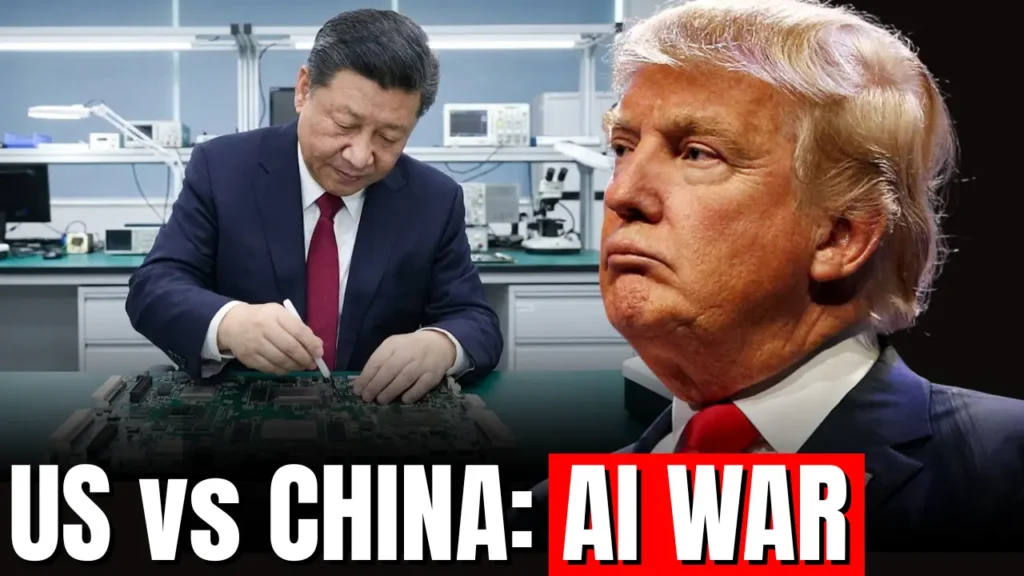
Trump administration tariffs create particular concern for this intricate system. How trade policy affects $400 million lithography machines remains unclear.
The semiconductor industry exemplifies globalization’s benefits and vulnerabilities simultaneously.
The AI Chip Race Intensifies
All these developments occur within the broader race to build chips powering artificial intelligence. Demand for AI semiconductors has reshaped the entire industry.
AI chip race dynamics:
- Data center GPU demand driving investment
- Every major tech company seeking AI advantages
- Manufacturing capacity constraining supply
- Billions flowing into new fabrication
- Geopolitical competition accelerating spending
Companies controlling AI chip production hold strategic advantages extending beyond business into national security. This reality drives both corporate and government investment.
The stakes couldn’t be higher as artificial intelligence transforms every industry.
What This Means for Technology’s Future
The semiconductor manufacturing landscape revealed through CNBC’s exclusive access illuminates technology’s foundation. Without these machines, factories, and designs, the AI revolution stalls.
Future implications:
- Continued investment in manufacturing essential
- Supply chain resilience increasingly prioritized
- Custom silicon strategies expanding
- Geopolitical factors shaping industry structure
- Innovation requiring unprecedented capital
Understanding how chips get made provides crucial context for comprehending technology’s trajectory. The microscopic and massive scales involved represent human engineering at its most impressive.
FAQs
What is ASML’s High NA EUV machine?
High NA is ASML’s latest generation extreme ultraviolet lithography system costing approximately $400 million each. These bus-sized machines are the only equipment capable of etching the nanoscopic patterns required for the most advanced semiconductors used by companies like Nvidia, Apple, and AMD.
Why is Texas Instruments investing $60 billion in US manufacturing?
Texas Instruments is building seven new fabrication plants in Texas and Utah to produce analog and embedded semiconductors domestically. Major customers including Apple, Nvidia, and Ford will use these chips, reflecting broader industry movement toward American manufacturing amid geopolitical concerns.
What new chips did Apple announce for iPhone?
Apple unveiled three significant custom chips: the A19 Pro SoC with AI-focused neural accelerators, the N1 networking chip replacing Broadcom components, and the C1X second-generation modem replacing Qualcomm parts. These represent Apple’s strategy to control all core iPhone semiconductors.
How might tariffs affect semiconductor manufacturing?
Tariffs create uncertainty for the complex global semiconductor supply chain. ASML machines contain components from dozens of countries, chips are manufactured internationally, and products are assembled across continents. Trade policy changes could significantly impact costs and logistics throughout this system.
Why are semiconductors important for AI?
Artificial intelligence requires massive computational power that specialized semiconductors provide. Advanced chips from companies like Nvidia enable AI training and inference. Without sophisticated semiconductor manufacturing capabilities, AI development would be impossible at current scales.
Conclusion
The high-stakes world of semiconductor manufacturing operates at scales both incomprehensibly small and monumentally large. ASML’s $400 million Dutch machines, Texas Instruments’ $60 billion American megaproject, and Apple’s custom chip strategy all contribute to technology’s foundation.
These exclusive glimpses inside normally hidden facilities reveal the extraordinary complexity underlying every smartphone, computer, and AI system. The chips powering artificial intelligence require engineering achievements that push physical limits.
As geopolitical tensions and AI demand reshape the industry, understanding semiconductor manufacturing becomes essential for comprehending technology’s future.
Follow our technology coverage for more exclusive industry insights. Share your thoughts on semiconductor manufacturing in the comments below.