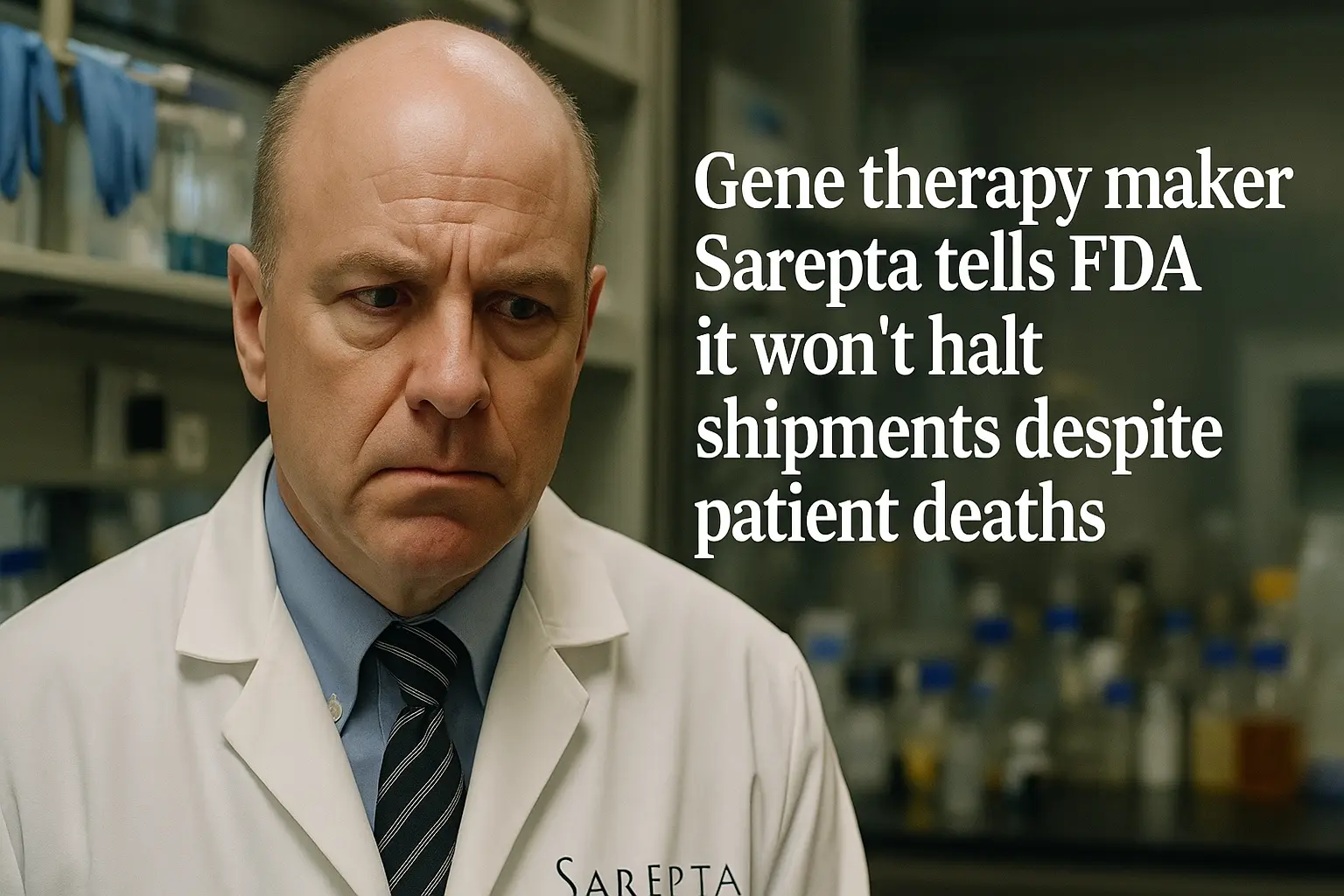
Sarepta Therapeutics faces scrutiny after refusing to pause shipments of its gene therapy treatment following multiple patient deaths. Here’s what the FDA, experts, and the public are saying.
A Storm in the Biotech World: Sarepta Draws Line in the Sand
In a bold and controversial move, gene therapy pioneer Sarepta Therapeutics has told the U.S. Food and Drug Administration (FDA) it will not halt the distribution of its high-profile gene therapy treatment, despite multiple reports of patient deaths.
This decision places Sarepta directly in the eye of a growing ethical and medical storm — one that could shape the future of gene therapy regulation in the U.S. and beyond.
So why is this story making waves across Wall Street, Washington, and families nationwide?
Let’s break it down.
What Exactly Happened?
Sarepta’s flagship therapy, marketed for Duchenne muscular dystrophy (DMD) — a rare but deadly genetic disorder — has been both a symbol of innovation and a lightning rod for criticism.
In recent months, at least two pediatric patients died following treatment. These cases raised alarm bells, prompting the FDA to issue a formal request for Sarepta to consider pausing shipments pending further investigation.
But Sarepta’s response? A firm “No.”
The company argued that the benefits outweigh the risks, citing clinical data and support from some medical professionals and patient families.
Sarepta’s Justification: “Patients Deserve Access”
In its statement, Sarepta emphasized that thousands of families are depending on the therapy, and halting shipments could “remove a lifeline” for those with no other options.
“We remain committed to the safety of patients, but we must also consider the devastating consequences of inaction,” said a Sarepta spokesperson.
They pointed to a robust post-market surveillance system, ongoing clinical trials, and the FDA’s own previous fast-track approval as validation of the therapy’s value.
FDA Pushes Back—But Treads Carefully
While the FDA hasn’t yet mandated a recall or stop-sale, the agency is reportedly evaluating Sarepta’s noncompliance with its recommendation.
Biotech analysts note that a forced halt would be legally and politically risky — especially in an environment where drug innovation is closely tied to America’s global leadership in medicine.
Still, FDA insiders suggest formal investigations are now underway, and potential regulatory or legal actions are “not off the table.”
The Deaths: What We Know So Far
The exact cause of death in the two reported cases remains under investigation. Sarepta claims there is no definitive link between the therapy and the fatalities, although inflammatory responses and organ complications are known side effects.
The company says both children had advanced-stage DMD, and complications were “not unexpected.”
Critics, however, argue that transparency has been lacking, and full clinical details of the adverse events have not been publicly disclosed.
Wall Street Reacts: Investors Are Split
The biotech world thrives on risk vs. reward — and Sarepta’s stance is no exception.
- Sarepta stock dipped 6% after the FDA’s request became public.
- But surprisingly, the stock recovered partially following the company’s defiant stand, indicating support from bullish investors betting on the long-term potential of gene therapy.
“This is the price of playing in the biotech sandbox,” said one portfolio manager. “But if Sarepta weathers the storm, they could emerge stronger.”
Still, institutional investors are watching FDA’s next move closely — as a forced recall could send the stock plummeting.
Patient Advocacy Groups: A Mixed Response
Among parents of DMD patients, emotions are raw — and divided.
Some support Sarepta, insisting that delays could cost lives. Others demand transparency and accountability, arguing that no therapy should come at the cost of safety.
“I lost my child to this disease,” said one mother. “And I still support Sarepta. Because if there’s even a chance this treatment helps another child, it’s worth it.”
But another parent said, “We deserve honesty. If there’s risk, we need to know exactly what it is — not marketing spin.”
The Larger Debate: Innovation vs. Regulation
Sarepta’s decision raises critical questions for the entire healthcare ecosystem:
- How should the FDA balance access and safety in cutting-edge treatments?
- Should companies have more say in post-approval product distribution?
- And what happens when public pressure clashes with scientific caution?
Biotech experts say this case could become a landmark moment, potentially reshaping how gene therapies are monitored post-approval.
“We’re in uncharted waters,” said Dr. Alicia Ruiz, a biotech policy analyst. “This could set a precedent that either emboldens companies — or forces new regulations.”
Looking Ahead: What Could Happen Next
- FDA Investigation Results – If deaths are officially linked to the therapy, mandatory halts or black box warnings could follow.
- Congressional Hearings – With patient safety in question, politicians may demand Sarepta testify publicly.
- Investor Lawsuits – If investors feel misled, class-action lawsuits could emerge.
- Long-Term Industry Impact – Other gene therapy makers are now on alert — especially those using accelerated approval pathways.
Conclusion: A Biotech Crossroads
Sarepta Therapeutics is standing at a crossroads — with lives, reputations, and billions in market value at stake.
Their refusal to pause shipments after patient deaths is either a courageous stand for patient access — or a reckless gamble with public trust.
What’s certain is this: The entire biotech industry is watching. And so is the American public.
As gene therapies grow from promise to mainstream, the Sarepta story could define how we weigh hope against risk, and urgency against caution in the age of genetic medicine.
Must Read
Fed’s Goolsbee: New Tariff Announcements May Delay Rate Cuts