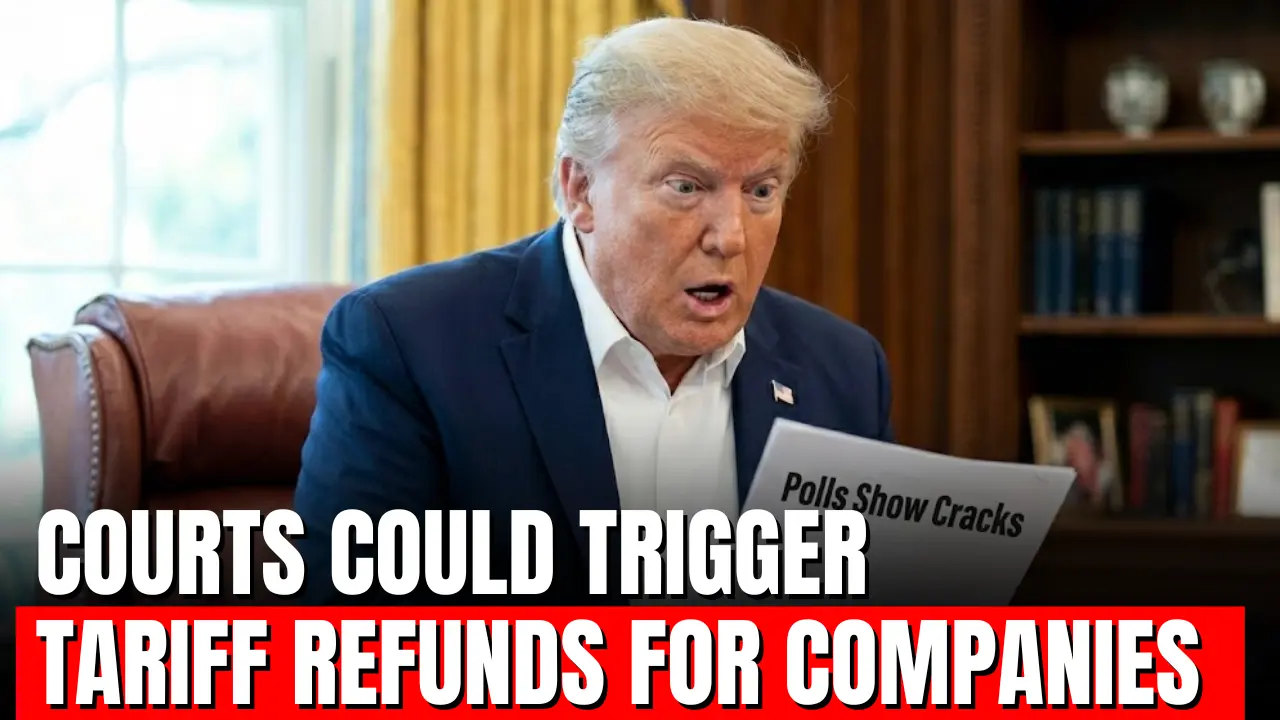
Court confirms companies entitled to tariff refunds if Trump policies struck down. Supreme Court skepticism prompts media push by administration. Full story here.
Table of Contents
Court Confirms Companies Entitled to Tariff Refunds if Trump’s Policies Are Struck Down
The Court of International Trade has confirmed that American companies would be entitled to refunds if President Trump’s controversial tariffs are ultimately struck down by the courts. With the Supreme Court expressing skepticism about the tariffs’ legality, the administration has launched a media offensive ahead of an expected ruling. Billions of dollars hang in the balance as businesses await judicial decisions that could reshape American trade policy.
Court Confirms Refund Entitlement
The Court of International Trade has issued a significant clarification with major financial implications. American companies that paid tariffs under Trump’s trade policies could receive refunds if those tariffs are ruled illegal.
Dina Doll reported on how this confirmation has intensified the stakes of pending legal challenges. Billions of dollars in duties already collected could flow back to American businesses.
The ruling provides clarity that companies have been seeking as they calculate potential financial recoveries. Many have continued paying under protest while awaiting judicial resolution.
What Refunds Could Mean
The potential for tariff refunds carries enormous financial implications. Companies across multiple industries have paid substantial duties under challenged policies.
Refund implications:
| Factor | Impact |
|---|---|
| Total exposure | Billions in collected tariffs |
| Affected industries | Manufacturing, retail, agriculture, technology |
| Company impact | Potential windfall for importers |
| Cash flow | Significant liquidity returning to businesses |
| Pricing effects | Possible consumer price adjustments |
| Economic boost | Capital returned to productive use |
Companies that maintained detailed records of tariff payments are best positioned to claim refunds. The administrative process for recovering funds would follow judicial decisions.
Business groups have tracked this issue closely, advising members on documentation and legal strategies.
Supreme Court Skepticism
The Supreme Court has expressed skepticism about the legal basis for Trump’s tariff policies. This judicial doubt has increased expectations that the tariffs may be struck down.
Sources of legal skepticism:
- Statutory authority — Questions about presidential power to impose tariffs
- Emergency declarations — Challenges to national security justifications
- Due process — Concerns about implementation procedures
- Congressional role — Constitution assigns trade authority to legislature
- Precedent questions — How ruling affects future executive action
- Separation of powers — Balance between branches challenged
The Court’s questioning during oral arguments signaled potential problems for the administration’s legal position. Experienced court watchers noted unusual skepticism from multiple justices.
A ruling against the tariffs would have immediate and far-reaching consequences.
Administration Takes Fight to Media
Facing judicial headwinds, President Trump and Treasury Secretary have launched a media campaign defending the tariffs. The public relations offensive aims to shape opinion ahead of rulings.
Media strategy elements:
| Approach | Purpose |
|---|---|
| Television appearances | Direct messaging to public |
| Economic arguments | Emphasizing policy benefits |
| National security framing | Justifying emergency powers |
| Political messaging | Rallying supporter base |
| Pressure tactics | Signaling disagreement with courts |
The administration apparently hopes public support might influence the political environment surrounding any adverse ruling. Media appearances allow direct communication bypassing legal forums.
This strategy acknowledges the difficult legal position while attempting to maintain political viability for trade policies.
The Legal Challenges Explained
Multiple legal challenges have targeted Trump’s tariff policies. Understanding these cases illuminates what’s at stake.
Legal challenge dimensions:
- Presidential authority to impose tariffs questioned
- National emergency declarations challenged
- Specific tariff implementations contested
- Due process in tariff procedures scrutinized
- Congressional power versus executive action debated
The cases have worked through lower courts with mixed results. Supreme Court review now addresses fundamental questions about trade authority.
Legal experts note that the Court’s eventual ruling could reshape the balance of trade powers between branches for decades.
Industries Watching Closely
American companies across numerous sectors await resolution with intense interest. The stakes vary by industry but are universally significant.
Industries most affected:
| Industry | Tariff Exposure |
|---|---|
| Manufacturing | Raw material and component tariffs |
| Retail | Consumer goods import duties |
| Agriculture | Equipment and input costs |
| Technology | Electronics and component tariffs |
| Automotive | Parts and vehicle duties |
| Construction | Steel, aluminum, materials |
Companies in these sectors have absorbed or passed through tariff costs for years. Refunds would represent substantial financial events for many businesses.
Trade associations have coordinated legal strategies and member communications throughout the litigation process.
What Happens After a Ruling
If the Supreme Court strikes down the tariffs, a complex process would follow. Refunds wouldn’t arrive immediately but would eventually flow to eligible companies.
Post-ruling process:
- Formal ruling — Supreme Court decision issued
- Implementation orders — Lower courts directing action
- Customs processing — Government preparing refund mechanisms
- Claim filing — Companies submitting refund requests
- Verification — Documentation review and approval
- Payment — Actual refund distribution
The timeline from ruling to refund could span months or longer. Companies should prepare documentation in advance to expedite claims.
Legal counsel familiar with customs procedures can help businesses maximize recovery.
Political Implications
Beyond financial considerations, the tariff litigation carries significant political implications. A Supreme Court loss would represent a major setback for Trump’s trade agenda.
Political dimensions:
| Aspect | Consideration |
|---|---|
| Policy credibility | Trade approach undermined if illegal |
| Executive power | Limits on presidential authority clarified |
| Future tariffs | Constraints on similar actions |
| Congressional role | Legislature’s trade power reinforced |
| Election impact | Economic policies facing scrutiny |
The administration’s media campaign reflects awareness of these political stakes. Defending tariffs publicly maintains political positioning regardless of legal outcomes.
The intersection of legal proceedings and political messaging continues through the ruling.
Business Preparation Recommended
Companies potentially entitled to refunds should prepare now. Documentation and legal groundwork position businesses for efficient recovery.
Preparation steps:
- Compile all tariff payment records
- Document product classifications
- Retain customs entry documentation
- Consult trade law attorneys
- Monitor case developments
- Prepare claim filing procedures
Businesses that wait until after rulings to organize may face delays in receiving refunds. Proactive preparation accelerates recovery once decisions are issued.
Trade attorneys report increased client inquiries about refund positioning strategies.

FAQs
Will companies really get tariff refunds if courts strike down Trump’s policies?
Yes, the Court of International Trade has confirmed that companies would be entitled to refunds of tariffs paid if the policies are ruled illegal. The refunds would apply to duties already collected under the challenged tariff programs.
Why is the Supreme Court skeptical about the tariffs’ legality?
The Supreme Court has questioned the statutory authority for presidential tariff imposition, challenged national security justifications, raised due process concerns, and examined whether the policies improperly bypass Congress’s constitutional role in regulating trade.
How much money could companies get back in tariff refunds?
Billions of dollars in tariffs have been collected under the challenged policies. Individual company refunds would depend on how much each business paid in duties. Industries including manufacturing, retail, technology, and agriculture have significant exposure.
Why is the Trump administration fighting this battle in the media?
Facing skepticism from the Supreme Court, the administration is using media appearances to defend tariff policies publicly, rally supporter base, and potentially influence the political environment surrounding any adverse judicial ruling.
What should companies do to prepare for potential refunds?
Companies should compile tariff payment records, document product classifications, retain customs entry documentation, consult trade law attorneys, monitor case developments, and prepare claim filing procedures to expedite refund recovery if courts rule against the tariffs.
Conclusion
The Court of International Trade’s confirmation that companies could receive tariff refunds adds enormous financial stakes to pending Supreme Court decisions. With justices expressing skepticism about tariff legality, billions of dollars may eventually flow back to American businesses.
The administration’s media offensive reflects awareness of difficult legal terrain while attempting to maintain political support for trade policies. Whether this public relations effort influences outcomes remains to be seen.
American companies should prepare documentation now to position for efficient refund recovery if courts ultimately strike down the challenged tariffs.
Follow our legal and business coverage for updates on the tariff litigation. Share your thoughts on trade policy in the comments below.