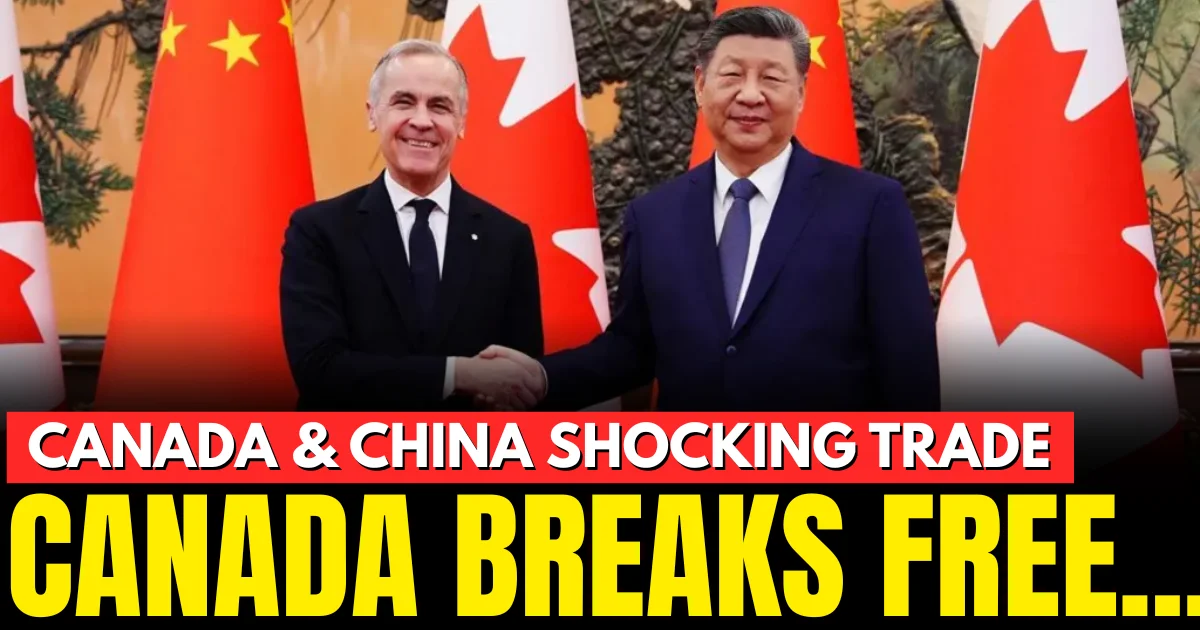
Canada and China announce major tariff relief after Carney-Xi meeting. Canola tariffs drop from 85% to 15%, EV tariffs cut to 6.1%. Full details here.
Table of Contents
China and Canada Announce Major Tariff Relief After Carney-Xi Meeting
Introduction
Chinese President Xi Jinping and Canadian Prime Minister Mark Carney announced significant tariff reductions Friday, marking a dramatic reset in bilateral relations after a high-stakes Beijing meeting. China will slash tariffs on Canadian canola oil from 85% to 15% by March 1, while Canada agreed to tax Chinese electric vehicles at just 6.1%—the most-favoured-nation rate. The breakthrough comes as Canada seeks to diversify trade away from the US amid Trump’s unpredictable tariff policies, potentially reshaping North American economic alliances.
The Deal: Key Numbers
Tariff Reduction Breakdown
Chinese concessions:
- Canola oil tariffs: 85% → 15% (by March 1, 2026)
- Canadian lobster: Reduced tariffs
- Canadian crab: Lower levies
- Canadian peas: Tariff relief
Canadian concessions:
- Chinese EV tariffs: 100% → 6.1% (most-favoured-nation rate)
- EV import cap: 49,000 vehicles maximum at reduced rate
- Rationale: Protect domestic automakers from Chinese EV flood
Trade impact:
- Chinese imports of Canadian goods fell 10% in 2025
- Beijing retaliated against $2 billion in Canadian farm/food products (2024)
- China is Canada’s 2nd-largest trading partner (far behind US)
Why This Deal Matters
Canada’s Strategic Pivot
Carney’s motivation:
- Diversify from US dependence (Canada’s biggest trading partner)
- Uncertainty from Trump’s on-again-off-again tariffs
- Position Canada for “new world order”
Carney’s statement: Canada’s relationship with China has been more “predictable” in recent months, with talks “realistic and respectful.”
Geopolitical significance: Pushes US ally toward its biggest rival—direct result of Trump tariff policy.
Xi’s Global Strategy
China as “Stable Partner”
Recent diplomatic wins:
- South Korean president visited Beijing (recent weeks)
- Irish prime minister visited Beijing
- UK prime minister visit expected soon
- German Chancellor visit anticipated
Xi’s message: China offers stable, pragmatic “win-win” partnerships vs. US unpredictability.
Xi’s quote: “The healthy and stable development of China-Canada relations is conducive to world peace, stability, development, and prosperity.”
Carney’s First Visit in Nearly a Decade
Historical Context
Last Canadian PM visit: Justin Trudeau in 2017
What changed:
- 2018: Canada arrested Huawei CFO Meng Wanzhou (at US request)
- Days later: China detained Canadians Michael Kovrig and Michael Spavor (espionage charges)
- Critics called it retaliation; China denied
- 2021: All three released
- Years of strained relations followed
Carney’s visit: First Canadian leader in China in nearly 10 years—signals major diplomatic thaw.
What Carney Discussed with Xi
Canada’s “Red Lines”
Key issues raised:
- Human rights concerns
- Election interference allegations
- Need for “guardrails” in relationship
- Taiwan claims (China’s position)
- Jimmy Lai imprisonment (Hong Kong pro-democracy figure)
- 100 Canadians imprisoned in China
Carney’s approach: “We take the world as it is—not as we wish it to be.”
Engagement strategy: “Narrower, more specific” cooperation with countries not sharing same values.
Communication style: “We don’t grab a megaphone” for disagreements—direct conversations instead.
Economic Agreements Beyond Tariffs
Three-Day Visit Highlights
Wednesday (Day 1):
- Met senior executives from Chinese businesses
- EV battery maker representatives
- Energy giant leadership
Thursday (Day 2):
- Signed multiple agreements on energy cooperation
- Trade cooperation frameworks established
Friday (Day 3):
- Great Hall of the People meeting with Xi
- Tariff reduction announcement
Potential outcome: More Chinese investment in Canada—right on America’s doorstep.
Expert Analysis
“Modest but Realistic” Reset
Colin Robertson (former Canadian diplomat, VP at Canadian Global Affairs Institute):
“A reset of a relationship that may be modest in ambition but much more realistic about what we can reasonably obtain.”
Michael Kovrig (former detainee, X post before meeting):
- Visit should be about “managing leverage,” not just warming ties
- Chinese negotiators are “extremely adroit, calculating, always looking for leverage”
- “Engagement has to be handled with discipline”
- Carney should advocate for 100 Canadians imprisoned in China
The Trump Factor
How US Tariffs Drove the Deal
Carney’s implicit message: Trump’s unpredictable trade policy pushed Canada toward China.
US-Canada-China triangle:
- US imposes tariffs on allies
- Allies seek alternative partnerships
- China positions as stable alternative
- US loses leverage over allies
Carney’s framing: “The world has changed dramatically” and Canada’s positioning “will shape our future for decades to come.”
Earlier statement: Canada-China partnership sets up “new world order”; multilateral system has been “eroded, to use a polite term, or undercut.”
Impact on Key Industries
Winners from the Deal
Canadian canola farmers:
- 85% tariff reduction restores competitiveness
- China is major canola market
- Years of punitive tariffs ending
Canadian seafood exporters:
- Lobster tariff reductions
- Crab levy cuts
- Access to massive Chinese consumer market
Chinese EV manufacturers:
- 49,000 vehicle cap at 6.1% tariff
- Down from 100% punitive rate
- Foothold in North American market
Canadian consumers:
- Potential access to affordable Chinese EVs
- Lower vehicle costs (within 49,000 cap)
Limitations & Concerns
What This Deal Doesn’t Solve
Carney acknowledged:
- Canada and China have “different systems”
- Limits breadth of cooperation
- Relationship will remain “narrower, more specific”
Outstanding issues:
- 100 Canadians imprisoned in China
- Election interference allegations
- Human rights disagreements
- Taiwan tensions
- Hong Kong democracy concerns
Automaker fears: 49,000-vehicle cap response to industry concerns about Chinese EV influx destroying domestic production.
Timeline: Canada-China Relations
Key Dates
- 2017: Trudeau visits Beijing (last Canadian PM visit)
- Dec 2018: Canada arrests Meng Wanzhou
- Days later: China detains Kovrig and Spavor
- 2021: All three released
- 2024: Canada imposes 100% tariffs on Chinese EVs
- 2024: China retaliates with tariffs on $2B Canadian products
- 2025: Chinese imports of Canadian goods fall 10%
- Jan 2026: Carney visits Beijing
- March 1, 2026: New tariff rates take effect
What Happens Next
Implementation & Broader Implications
Immediate:
- March 1, 2026: Canola tariff reduction takes effect
- Chinese EV imports begin (up to 49,000 cap)
- Energy/trade agreements implementation
Short-term:
- Potential Chinese investment in Canada increases
- Other US allies may follow Canada’s example
- UK, Germany visits to Beijing proceed
Long-term:
- Reshaping of North American trade dynamics
- China’s influence in US sphere increases
- Multilateral system evolution continues
FAQ Section
What tariff reductions did China and Canada agree to?
China will reduce tariffs on Canadian canola oil from 85% to 15% by March 1, 2026, and lower levies on lobster, crab, and peas. Canada will tax Chinese electric vehicles at 6.1% (down from 100%) with a cap of 49,000 vehicles.
Why is Mark Carney visiting China now?
Carney is seeking to diversify Canadian trade away from US dependence amid Trump’s unpredictable tariff policies. He’s the first Canadian PM to visit China in nearly a decade, signaling a major reset after years of strained relations.
How much trade does Canada do with China?
China is Canada’s second-largest trading partner, though far behind the US in volume. In 2024, China imposed tariffs on over $2 billion in Canadian farm and food products, causing a 10% drop in Chinese imports of Canadian goods in 2025.
What happened between Canada and China in 2018?
Canada arrested Huawei CFO Meng Wanzhou at US request in December 2018. Days later, China detained Canadians Michael Kovrig and Michael Spavor on espionage charges in what critics called retaliation. All three were released in 2021.
Will Canada allow unlimited Chinese electric vehicles?
No. Canada agreed to a cap of 49,000 Chinese EVs at the reduced 6.1% tariff rate. This protects Canadian automakers from concerns about an influx of affordable Chinese electric vehicles flooding the market.
What did Carney say about human rights in China?
Carney said Canada “takes the world as it is—not as we wish it to be” and raised concerns about human rights, election interference, Taiwan, Hong Kong’s Jimmy Lai, and 100 imprisoned Canadians. He emphasized “narrower, more specific” cooperation with countries not sharing Canadian values.