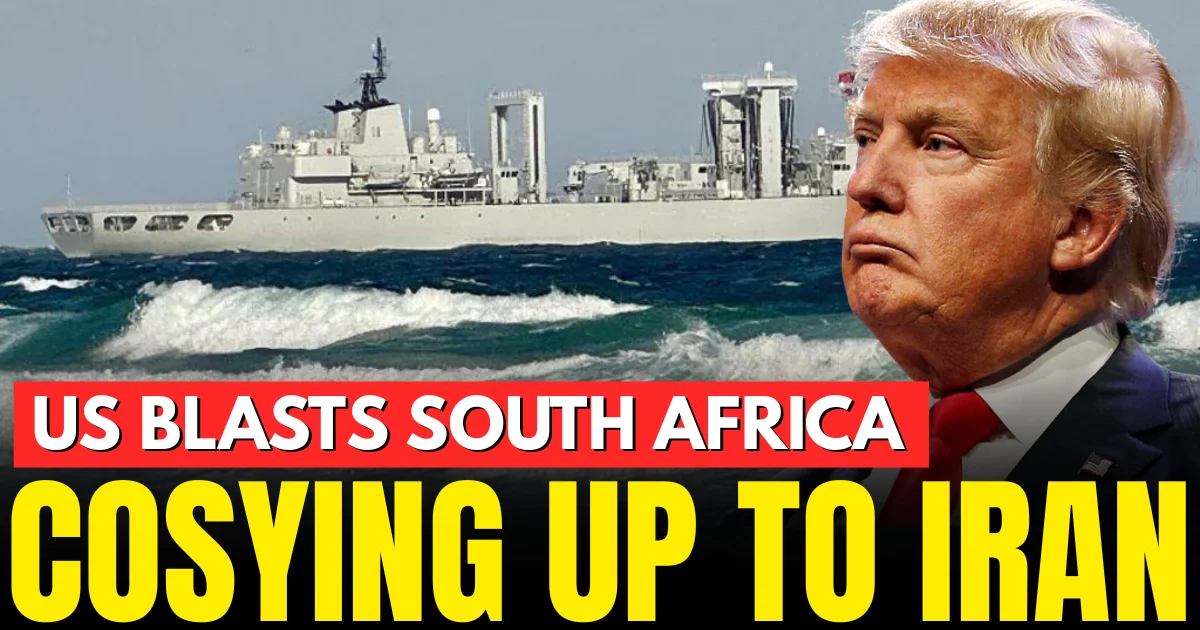
Washington accuses South African defence forces of defying government orders regarding Iranian naval vessels. Full diplomatic crisis details inside.
Table of Contents
Washington Condemns South African Military for Alleged Iranian Warship Defiance
American officials have launched sharp criticism against South Africa’s armed forces leadership. Washington alleges defence officials deliberately ignored governmental directives requiring Iranian naval vessels to depart from African territorial waters.
This diplomatic confrontation intensifies existing tensions between longtime allies amid expanding BRICS+ military cooperation.
Crisis Overview at a Glance
| Element | Details |
|---|---|
| Accusation source | United States Embassy, South Africa |
| Target of criticism | South African Defence Ministry |
| Core allegation | Defying presidential directives |
| Subject matter | Iranian warship presence |
| Location | Cape Town coastal waters |
| Military exercise | Peace Resolve naval drill |
What Exactly Did Washington Allege?
American diplomatic representatives issued strongly-worded condemnation through official channels.
Embassy Statement Highlights
The US mission expressed “concern and alarm” regarding reported insubordination within South African defence structures.
Key accusations outlined:
- Defence minister allegedly refused compliance
- Military leadership defied governmental instructions
- Iranian vessels remained despite departure orders
- Actions undermined regional maritime stability
Direct Quote from American Officials
Washington declared that Pretoria cannot simultaneously lecture globally about justice while maintaining close Iranian military ties.
South African Government Response
Defence officials announced immediate investigative measures following American accusations.
Official Ministry Position
| Response Element | Details |
|---|---|
| Action announced | Formal inquiry launched |
| Characterization | “Serious allegations” acknowledged |
| Investigation scope | Root cause determination |
| Timeline | Not specified |
Defence Minister’s Clarification
Minister Angie Motshekga issued formal statement addressing chain-of-command questions.
Minister’s recorded position:
Presidential directives from Cyril Ramaphosa were properly communicated to all relevant parties. Instructions received agreement and commitment toward implementation.
The Peace Resolve Naval Exercise Explained
This military cooperation exercise sparked the diplomatic confrontation.
Exercise Specifications
| Aspect | Information |
|---|---|
| Exercise name | Peace Resolve |
| Duration | One week |
| Leading nation | China |
| Start date | Previous Friday |
| Participating bloc | BRICS+ alliance |
Timeline Complication
Iranian naval vessels had already anchored at Cape Town harbor before departure directives reportedly emerged. This timing created implementation challenges for any reversal orders.
Understanding BRICS+ Alliance Context
This military exercise reflects broader geopolitical realignment patterns.
Alliance Evolution Timeline
| Year | Development |
|---|---|
| 2006 | Original BRIC formation (Brazil, Russia, India, China) |
| 2010 | South Africa joins, becomes BRICS |
| 2024-2025 | Expansion adds new members |
| Current | Renamed BRICS+ |
Current Membership Roster
Expanded alliance participants:
- Brazil
- Russia
- India
- China
- South Africa
- Egypt
- Ethiopia
- Indonesia
- Iran
- United Arab Emirates
Strategic Objective
This coalition explicitly aims to counterbalance Western political and economic dominance globally.
Washington’s Broader Criticism Framework
American officials connected military cooperation concerns to Iranian domestic developments.
Human Rights Dimension
Washington condemned South African hospitality toward Iran during ongoing protest suppression.
US embassy characterization:
| Issue | American Position |
|---|---|
| Iranian protests | Brutal crackdown ongoing |
| Timing | “Unconscionable” invitation |
| Comparison | Cited South African freedom struggle |
| Maritime impact | Regional stability undermined |
Non-Alignment Rejection
American representatives directly challenged South Africa’s claimed neutral foreign policy stance.
Washington’s assessment:
Current actions represent deliberate Iranian alignment rather than genuine non-aligned positioning.
Domestic South African Criticism Emerges
Local analysts echoed American concerns regarding governmental inconsistency.
Academic Perspective
William Gumede, associate professor at University of Witwatersrand, provided sharp assessment.
Key observations shared:
| Point | Gumede’s Analysis |
|---|---|
| Surprise factor | None whatsoever |
| Iranian protests | Currently ongoing |
| SA human rights groups | Calling for protester support |
| ANC response | Complete silence |
Hypocrisy Allegations
Gumede characterized ruling party behavior as fundamentally contradictory.
His assessment:
The governing ANC readily criticizes certain international regimes while maintaining absolute silence regarding Iranian democratic violations and human rights abuses.
Maritime Security Implications
This confrontation raises significant regional stability questions.
Concerns Identified
Strategic issues highlighted:
- Foreign military presence in African waters
- Command structure reliability questions
- Alliance obligations versus bilateral relationships
- Regional power projection patterns
Broader African Context
South African positioning affects continental security dynamics and Western partnership frameworks across multiple African nations.
Diplomatic Relationship Strain Indicators
This episode reflects deteriorating US-South Africa relations.
Recent Friction Points
| Issue Area | Tension Source |
|---|---|
| BRICS membership | Alternative power bloc participation |
| Russian relations | Ukraine conflict positioning |
| Iranian ties | Current military cooperation |
| Western alignment | Decreasing coordination |
Future Implications
Continued divergence may affect trade relationships, security cooperation, and diplomatic standing between Washington and Pretoria.
What Happens Next?
Several developments warrant monitoring following this diplomatic clash.
Pending Questions
- Inquiry outcomes: What will South African investigation reveal?
- Vessel status: Will Iranian warships ultimately depart?
- Exercise completion: How does Peace Resolve conclude?
- Bilateral fallout: What consequences emerge from Washington?
- Alliance dynamics: How do BRICS+ members respond?
Frequently Asked Questions
What did America accuse South African military of doing?
Washington alleges South African defence officials deliberately ignored presidential directives requiring Iranian warships to leave territorial waters. American diplomats claim military leadership defied governmental orders during ongoing BRICS+ naval exercises near Cape Town.
What naval exercise caused this diplomatic dispute?
The Peace Resolve military drill triggered this confrontation. China leads this week-long exercise involving BRICS+ member nations including Russia, Iran, and South Africa. Iranian vessels arrived at Cape Town before any departure orders reportedly emerged.
How did South Africa respond to American accusations?
Defence ministry officials announced formal inquiry launch to investigate these “serious allegations.” Minister Angie Motshekga stated President Ramaphosa’s instructions were properly communicated and agreed upon by all relevant parties.
What is BRICS+ and which countries participate?
BRICS+ represents an expanded economic and political alliance challenging Western global dominance. Current members include Brazil, Russia, India, China, South Africa, Egypt, Ethiopia, Indonesia, Iran, and United Arab Emirates. The grouping originated in 2006 as BRIC before South Africa joined in 2010.
Why did Washington mention Iranian protests in this criticism?
American officials condemned South African military hospitality toward Iran while Tehran suppresses domestic protests. Washington characterized this timing as “unconscionable” and compared Iranian citizen struggles to South African historical freedom movements.