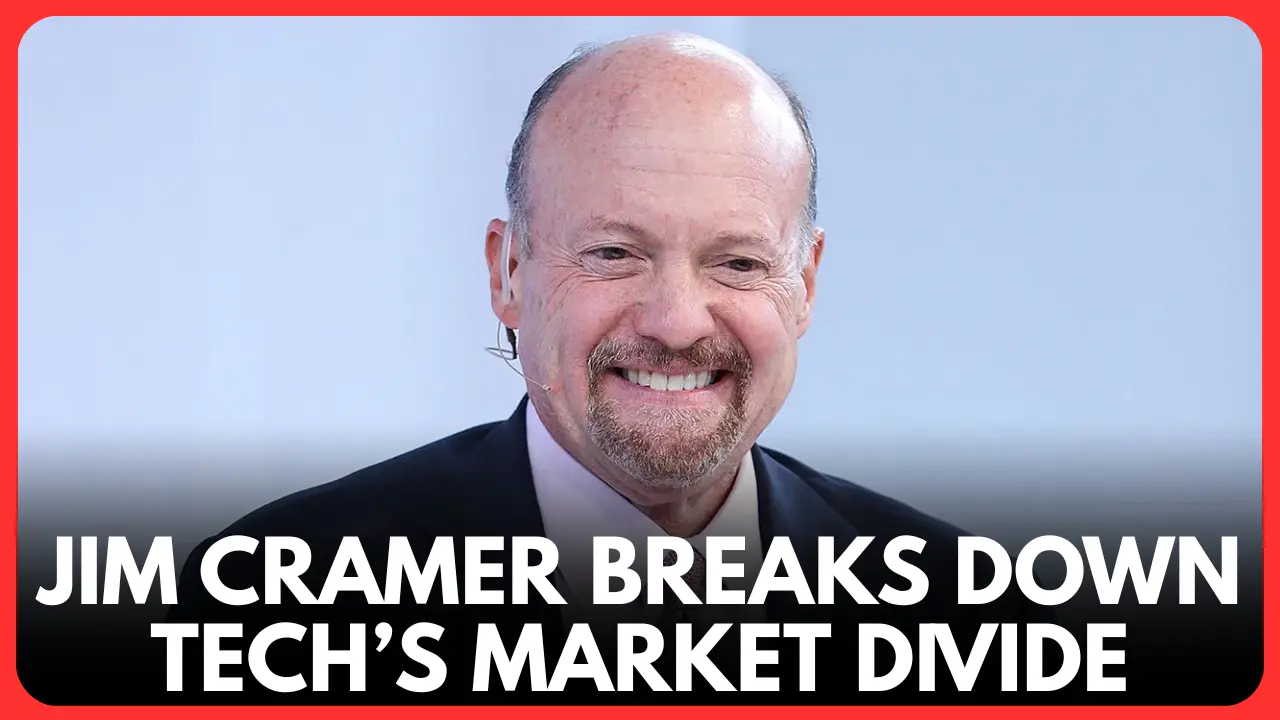
Mad Money host Jim Cramer breaks down the crucial divide between tech users and tech builders in the market. Learn how this affects your investments. Read more.
Table of Contents
Jim Cramer Breaks Down the Critical Divide Between Tech Users and Tech Builders in Today’s Market
‘Mad Money’ host Jim Cramer has outlined what he sees as a crucial distinction reshaping technology investing: the divide between tech users and tech builders. In his latest market analysis, Cramer explained why understanding this difference could determine whether investors profit or suffer in the current market environment. The framework offers a new lens for evaluating the sprawling technology sector.
Cramer Identifies the Divide
Jim Cramer used his ‘Mad Money’ platform to articulate a concept he believes investors must understand. The technology sector, he argued, is no longer monolithic but divided into two distinct camps.
Tech builders are companies creating the fundamental infrastructure powering the artificial intelligence revolution. Tech users are companies deploying that technology to enhance their existing businesses.
This distinction, Cramer suggested, carries enormous implications for stock selection and portfolio construction in the current market.
Defining Tech Builders
Tech builders, according to Cramer’s framework, are companies constructing the essential components and infrastructure enabling AI and advanced computing. These firms create the foundation others build upon.
Tech builder characteristics:
| Attribute | Description |
|---|---|
| Core business | Creating fundamental technology infrastructure |
| Products | Chips, cloud platforms, AI models, hardware |
| Market position | Essential suppliers to broader tech ecosystem |
| Revenue model | Selling picks and shovels in the AI gold rush |
| Examples | Semiconductor makers, cloud infrastructure providers |
These companies benefit directly from technology investment regardless of which specific applications succeed. Every AI project needs their products.
Cramer suggested tech builders often represent more reliable investments during technology transformations because demand for their products spans many end uses.
Defining Tech Users
Tech users occupy a different position in Cramer’s framework. These companies adopt technology created by builders to improve their operations or offerings.
Tech user characteristics:
| Attribute | Description |
|---|---|
| Core business | Applying technology to existing operations |
| Approach | Deploying AI and tech for efficiency or features |
| Market position | Customers of tech builders |
| Revenue model | Technology as cost center or enhancement |
| Examples | Retailers using AI, banks deploying automation |
Tech users face different risk profiles than builders. Their success depends not just on technology working but on successful implementation within their specific industries.
Cramer noted that tech users can benefit enormously from technology adoption but face execution risks builders don’t encounter.
Why This Distinction Matters Now
Cramer emphasized that understanding this divide has become crucial in the current market. The AI boom has created divergent fortunes within the broad technology space.
Current market dynamics:
- Builder outperformance — Companies making AI infrastructure have surged
- User uncertainty — Benefits from AI adoption less immediately visible
- Valuation gaps — Builders commanding premium multiples
- Investment flows — Capital concentrated in builder stocks
- Narrative power — Builder stories easier for investors to understand
The market has rewarded clarity about AI beneficiaries. Builders offering obvious exposure to AI spending have attracted the most investor enthusiasm.
Users must prove their AI investments generate returns, a longer and less certain process.
Investment Implications
Cramer translated his framework into practical investment guidance. Understanding whether a company builds or uses technology should inform portfolio decisions.
Investment considerations:
| Factor | Builders | Users |
|---|---|---|
| AI exposure | Direct and measurable | Indirect and uncertain |
| Revenue visibility | Clearer near-term | Longer-term payoff |
| Valuation | Often premium | More varied |
| Risk profile | Technology execution | Implementation execution |
| Catalyst timing | Immediate demand | Gradual efficiency gains |
Cramer suggested investors might want exposure to both categories but should understand what they’re buying. Confusing users for builders can lead to disappointment.
The distinction helps set appropriate expectations for different technology investments.
Examples in the Market
Cramer illustrated his framework with examples from current market leaders. The contrast helps clarify the conceptual divide.
Builder examples:
- Semiconductor companies making AI chips
- Cloud infrastructure providers
- Networking equipment manufacturers
- Data center construction companies
- AI model developers
User examples:
- Retailers implementing AI for inventory
- Banks deploying automation
- Healthcare companies using AI diagnostics
- Manufacturing firms adding smart technology
- Media companies using AI for content
The examples reveal how the same AI trend affects companies differently based on their position in the technology ecosystem.
The Valuation Question
Cramer addressed the valuation implications of his framework. Builders have commanded extraordinary premiums while users trade at more modest multiples.
Valuation dynamics:
| Issue | Analysis |
|---|---|
| Builder premiums | Justified by clear AI demand |
| User discounts | Reflect implementation uncertainty |
| Sustainability | Builder valuations require continued spending |
| Opportunity | Users may offer value if execution succeeds |
| Risk | Both categories face different challenges |
Some investors argue builder valuations have become stretched. Others contend that AI infrastructure spending justifies current prices.
Cramer suggested understanding the divide helps evaluate whether specific valuations make sense for each category.
Risks for Each Category
Both tech builders and users face distinct risk profiles. Cramer outlined the specific challenges each category confronts.
Builder risks:
- Cyclical demand patterns
- Competition from new entrants
- Customer concentration
- Technology obsolescence
- Capacity overbuilding
User risks:
- Implementation failure
- ROI disappointment
- Competitive catch-up
- Technology selection mistakes
- Cultural resistance to change
Neither category offers risk-free investment. Understanding category-specific risks helps investors assess whether potential returns justify the dangers.
How to Apply This Framework
Cramer offered practical advice for investors seeking to use his framework. The approach requires honest assessment of each company’s position.
Application steps:
- Classify holdings — Determine if each tech stock is builder or user
- Assess exposure — Understand what you’re betting on
- Set expectations — Align timeline with category characteristics
- Evaluate valuation — Apply appropriate metrics for category
- Monitor progress — Track relevant indicators for each type
The framework doesn’t predict winners and losers. Instead, it helps investors understand what they own and what must happen for investments to succeed.
Cramer emphasized that both categories can produce excellent returns for investors who understand what they’re buying.
The Bigger Picture
Cramer’s framework connects to broader market themes about technology investing. Understanding structural positions matters more than chasing hot trends.
Broader lessons:
- Technology investing requires nuance beyond “buy tech”
- Position in ecosystem determines risk and reward profile
- Clarity about what you’re buying improves decision-making
- Different categories deserve different evaluation approaches
- Market leadership can exist in both categories
The divide between builders and users will likely persist as technology continues transforming the economy. Investors who understand this distinction can navigate more effectively.

FAQs
What is the difference between tech users and tech builders according to Jim Cramer?
Tech builders create fundamental technology infrastructure like chips, cloud platforms, and AI systems. Tech users deploy technology created by others to improve their existing businesses. Builders sell picks and shovels while users dig for gold using those tools.
Which category has performed better in the current market?
Tech builders have generally outperformed as investors seek direct exposure to AI spending. Companies making semiconductors and cloud infrastructure have commanded premium valuations. Tech users have shown more varied performance depending on implementation success.
Should I invest in tech builders or tech users?
Both categories can produce strong returns for investors who understand what they’re buying. Builders offer clearer near-term AI exposure while users may offer value if implementation succeeds. Portfolio diversification across both categories may provide balanced technology exposure.
How do I determine if a company is a tech builder or user?
Ask whether the company creates fundamental technology infrastructure or applies technology created by others. If the company sells chips, cloud services, or AI platforms, it’s likely a builder. If it uses these technologies to improve retail, banking, or other operations, it’s likely a user.
What are the risks specific to each category?
Builders face cyclical demand, competition, and capacity overbuilding risks. Users face implementation failure, ROI disappointment, and technology selection mistake risks. Neither category is risk-free, but understanding category-specific challenges helps evaluate investments.
Conclusion
Jim Cramer’s framework distinguishing tech builders from tech users offers investors a valuable lens for navigating the complex technology sector. Understanding whether a company creates or deploys technology helps set appropriate expectations and evaluate risk profiles.
The divide has produced different market outcomes in the AI era, with builders generally commanding premium valuations while users show more varied performance. Both categories offer opportunities for investors who understand what they’re buying.
Cramer’s analysis reminds investors that technology investing requires nuance beyond simply buying the sector.
Follow our market coverage for more investment insights. Share your thoughts on tech investing strategies in the comments below.