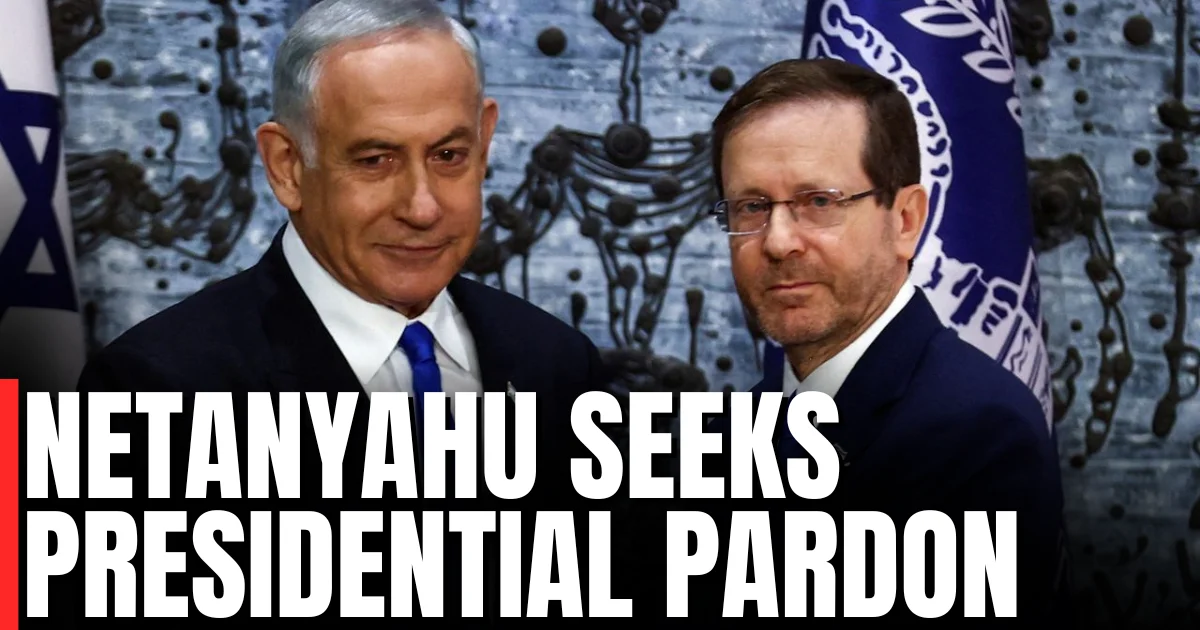
Israeli Prime Minister Benjamin Netanyahu is seeking a pardon from President Isaac Herzog to end his corruption cases. Learn what this means for Israeli politics. Read more.
Table of Contents
Benjamin Netanyahu Seeks Pardon From Israel’s President to End Corruption Cases
Israeli Prime Minister Benjamin Netanyahu has taken a dramatic step in his long-running legal battles by seeking a pardon from President Isaac Herzog. The move represents a significant shift in Netanyahu’s approach to corruption charges that have shadowed his leadership for years and could reshape Israeli politics if successful.
Netanyahu Makes His Move
Prime Minister Benjamin Netanyahu has formally approached Israel’s president seeking a pardon for the criminal charges he faces. The request aims to end legal proceedings that have consumed Israeli political attention for years.
The pardon request represents a notable change in Netanyahu’s strategy. He has long maintained complete innocence and vowed to fight charges through the court system.
Seeking presidential clemency suggests a potential path to resolution outside courtroom battles. The decision has generated intense reactions across Israel’s political spectrum.
Understanding the Charges
Netanyahu faces serious corruption charges that have resulted in an ongoing trial. Understanding these allegations provides essential context for the pardon request.
Charges against Netanyahu:
| Case | Allegation |
|---|---|
| Case 1000 | Receiving gifts from wealthy businessmen |
| Case 2000 | Alleged media manipulation deal |
| Case 4000 | Regulatory favors for positive coverage |
| Overall charges | Bribery, fraud, breach of trust |
Netanyahu has consistently denied all wrongdoing. He has characterized the prosecutions as politically motivated attempts to remove him from power.
The trial has proceeded slowly amid various legal maneuvers and political developments. A pardon would effectively end these proceedings entirely.
How Israeli Presidential Pardons Work
Israel’s presidential pardon system operates differently from the American model. Understanding these mechanics helps assess Netanyahu’s request.
Israeli pardon process:
- Request submission — Defendant or representatives formally apply
- Presidential review — President examines case merits
- Consultation — Legal and governmental input considered
- Decision authority — President holds final determination power
- Conditions possible — Pardons can include various terms
- Timing flexibility — Can occur before or after conviction
President Isaac Herzog faces an enormously consequential decision. His choice will have lasting implications for Israeli democracy and justice.
The president’s role is largely ceremonial, but pardon authority represents one area of genuine presidential power.
Political Implications
A pardon would carry massive political ramifications across Israeli society. The decision affects far more than Netanyahu’s personal legal situation.
Political considerations include:
- Coalition government stability
- Opposition party responses
- Public opinion divisions
- Democratic norms and precedents
- Future prosecution policies
- International perceptions
Netanyahu’s supporters argue a pardon would end a divisive chapter and allow governing focus. Critics contend it would undermine rule of law principles.
The debate reflects deeper divisions within Israeli society about justice, leadership, and democratic accountability.
President Herzog’s Difficult Position
President Isaac Herzog faces an extraordinarily challenging decision. Multiple pressures and considerations weigh on his choice.
Pressures on Herzog:
| Factor | Consideration |
|---|---|
| Legal tradition | Respecting judicial independence |
| Political reality | Current governing coalition dynamics |
| Public opinion | Divided Israeli sentiment |
| Precedent setting | Future implications of decision |
| Personal legacy | How history will judge his choice |
| National unity | Healing versus deepening divisions |
Herzog has not publicly indicated how he will decide. The weight of this choice places him at a historic crossroads.
Whatever decision emerges will face intense scrutiny and lasting debate about its appropriateness.
Reactions Across Israel
News of Netanyahu’s pardon request has generated strong reactions throughout Israeli society. Opinions divide sharply along familiar lines.
Reaction spectrum:
- Netanyahu supporters — Welcome potential resolution to politically motivated persecution
- Opposition figures — Condemn attempt to escape legitimate accountability
- Legal experts — Debate appropriateness and precedent implications
- Media commentators — Analyze political calculations and consequences
- General public — Divided according to existing political affiliations
Street protests both supporting and opposing a potential pardon have occurred. The issue has intensified already significant political divisions.
Social media debates reflect the passionate disagreements permeating Israeli discourse on this topic.
Historical Context
Netanyahu’s situation has few direct precedents in Israeli history. However, examining past instances provides some perspective.
Historical considerations:
- Previous Israeli leaders have faced legal troubles
- Presidential pardons have been granted in various circumstances
- Sitting prime ministers facing trial remain rare globally
- Democratic norms regarding leader accountability evolving
- International comparisons offer mixed guidance
The unique combination of Netanyahu’s long tenure, serious charges, and continued political power makes this situation genuinely unprecedented.
How Israel handles this moment will be studied by democratic nations worldwide.
American Interest in the Story
Americans have particular reasons to follow this development closely. Israel-US relations make Israeli political developments internationally significant.
US relevance includes:
| Factor | American Interest |
|---|---|
| Alliance relationship | Closest Middle East partner |
| Military cooperation | Extensive defense coordination |
| Political connections | Strong bipartisan Israel support |
| Regional stability | Israeli politics affect broader region |
| Democratic values | Rule of law concerns resonate |
American political figures have generally avoided commenting directly on Israeli internal matters. However, the outcome will be closely watched in Washington.
The Biden administration and Congressional leaders monitor developments affecting this crucial alliance.
What Happens Next
Several possible paths forward exist depending on various decisions and developments. The situation remains fluid.
Possible scenarios:
- Pardon granted — Charges dismissed, Netanyahu continues governing
- Pardon denied — Trial continues toward eventual verdict
- Conditional pardon — Clemency with specific terms attached
- Delayed decision — President takes extended time to deliberate
- Political developments — Government changes affecting dynamics
Each scenario carries different implications for Israeli politics, justice, and society. The stakes extend far beyond one individual’s legal fate.
Observers should expect continued developments as this situation evolves.
The Broader Democracy Question
Netanyahu’s pardon request raises fundamental questions about democratic accountability. These concerns transcend Israeli politics specifically.
Democratic principles at stake:
- Should leaders face the same justice as ordinary citizens?
- Do political considerations ever justify clemency?
- How should democracies handle leaders accused of corruption?
- What precedents does leniency or prosecution establish?
- How do legal proceedings affect governance capacity?
Different democratic traditions answer these questions differently. Israel now confronts them in high-stakes fashion.
The world watches as one of America’s closest allies navigates these profound governance challenges.

FAQs
Why is Netanyahu seeking a pardon from Israel’s president?
Netanyahu is seeking a presidential pardon to end the corruption charges he faces including bribery, fraud, and breach of trust. A pardon would terminate ongoing legal proceedings and allow him to continue leading without the shadow of potential conviction.
What charges does Netanyahu face?
Netanyahu faces charges in three cases involving alleged bribery, fraud, and breach of trust. The allegations include receiving improper gifts from businessmen and allegedly trading regulatory favors for favorable media coverage. Netanyahu denies all charges.
Can Israel’s president actually pardon Netanyahu?
Yes, Israel’s president holds constitutional authority to grant pardons. President Isaac Herzog has the power to grant clemency that would end Netanyahu’s legal troubles. However, such a decision would be enormously controversial and consequential.
How does this affect US-Israel relations?
The pardon decision is considered an internal Israeli matter, and American officials have generally avoided direct comment. However, the outcome will be closely watched given the close US-Israel alliance and American interest in democratic governance principles.
What happens if Netanyahu doesn’t receive a pardon?
If no pardon is granted, Netanyahu’s corruption trial will continue through Israel’s court system toward eventual verdict. Conviction could carry significant penalties including potential imprisonment, though appeals would likely follow any guilty verdict.
Conclusion
Benjamin Netanyahu’s pursuit of a presidential pardon represents a pivotal moment in Israeli political history. The prime minister’s decision to seek clemency rather than continue fighting charges in court signals a potential new chapter in this long-running saga.
President Herzog now holds enormous responsibility for a decision that will shape Israeli democracy’s future. Whatever he decides will be debated for generations.
The world watches as Israel confronts fundamental questions about power, justice, and democratic accountability.
Follow our international coverage for updates on this developing story. Share your thoughts on this significant development in the comments below.